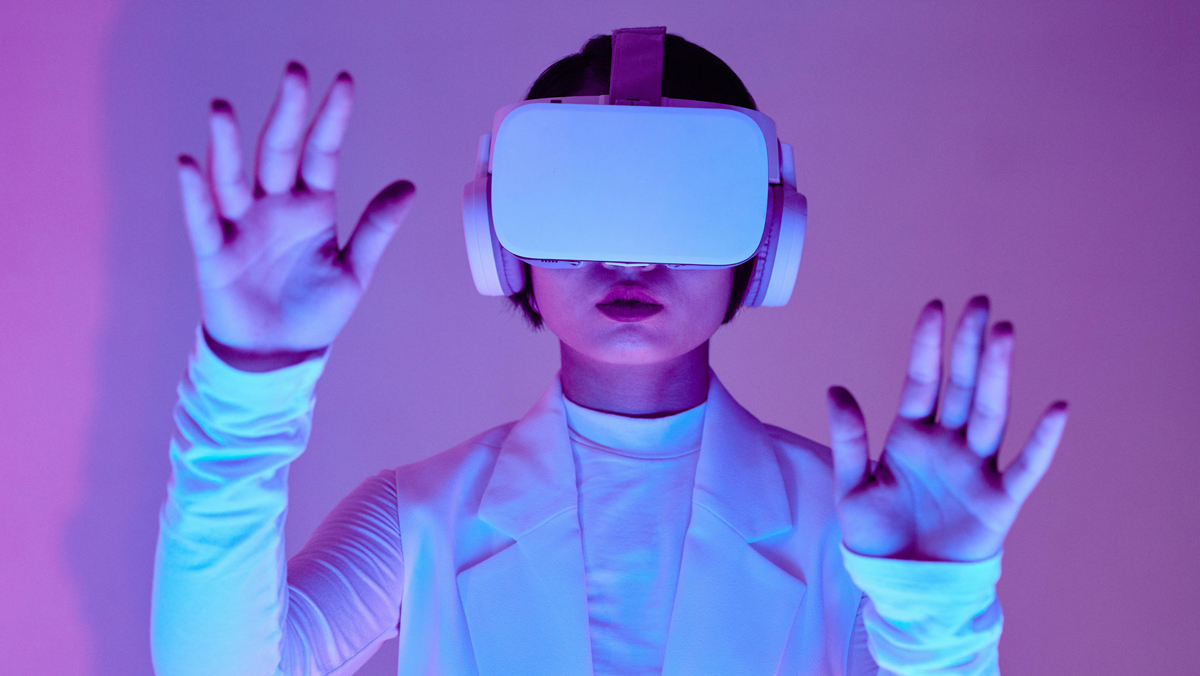
“Immersive virtual reality programming allows for stronger conversations,” says Sharon Whitfield, electronic resources & user access librarian at Rider University’s (N.J.) Franklin F. Moore Library. “These types of programs build empathy and can be used as mechanisms for meaningful dialogue and connection.”
Virtual reality (VR) has popped up in many libraries in recent years, sparking everything from senior-focused programs to virtual travel experiences to tween and teen STEAM programs. Using a headset, such as the Oculus, allows participants to immerse themselves into new worlds and experiences. In an academic library, VR can enhance educational takeaways from historical and cultural events and tie into curriculum.
I spoke with Whitfield about how VR programs are helping her academic library reconnect with students post-pandemic, how to connect VR to curriculum, and the logistics of maintaining such technology.
What makes VR programming beneficial to Rider University students?
We are a private university in Lawrenceville, New Jersey, located between New York City and Philadelphia. We have a lot of diversity in academic offerings with around 4,000 full-time students. The diversity of our student population is also steadily increasing, particularly the Latinx student population. We also have a significant number of first-generation students at Rider that the library is committed to serving. The library is here to fulfill a support structure for them and all students.
Many of our students commute and are originally from the suburban area. For these VR programs, we want to help students get out of that suburban setting to help them understand and empathize with others from the past and present. Ultimately, we want VR programs to enhance classroom learning and make it more immersive.
Why did you choose to do VR programming when not many academic libraries have yet to step into this medium?
When we applied for and received the American Library Association’s (ALA) American Rescue Plan: Humanities Grants for Libraries, we knew that this is what we wanted to do for our programming. The main inspiration for VR was the impact of the COVID pandemic on our students. When everything was on Zoom, there was no student immersion or connection to programs or in-person classroom learning. It was all very one-dimensional. I think many academic librarians are seeing this now as students are back on campus. There is still a distance between students and library programs.
Academic librarians are recognizing that higher education is different after COVID. Because of that, we need to think differently regarding how we plan our programs.
Tell me about the lineup of VR programs you are offering.
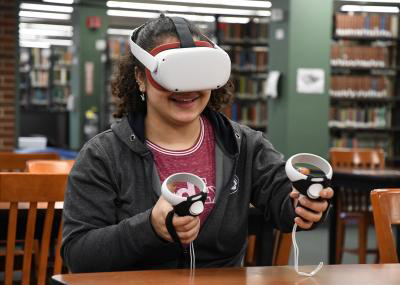
We have six immersive experiences planned, each with a different topical exploration. We just did our first one for Holocaust Studies, which was not directly tied in with the curriculum but a soft launch and introduction to the full series.
The first program was a walk-through of the Anne Frank House. Along with each VR experience, we offer a corresponding film viewing for Rider students, faculty, staff and the wider community. Nearby public libraries can participate in online discussions and film viewings as well. We also offer extra resources that align with each topical exploration. We want to look at the chosen topic through as many lenses as possible, not just through virtual reality.
I think that in the fall, once we tie the VR in with the curriculum, more students will start participating. We are also reaching out to student organizations that focus on specific topics we might cover and to various academic departments to give them the first opportunity to sign up or give extra credit. We want to target on a personal level.
Future programs will explore the experiences of Black Americans, refugees, and people without housing. These later topics will tie in more with the curriculum.
Do you create the VR content or do you purchase it?
We use Oculus headsets and have found many of our programs through the Oculus online store. Most of them are free! The Oculus website has a section called VR for Good that shares VR programs made to educate. These programs are great because they are high-quality and have opportunities for dialogue and thought processing. For example, the free program we will use for the topic on refugees is called “The Key” and follows a refugee named Anna through magical realism storytelling. “We Live Here” is about a homeless woman named Rockey whose tent and personal possessions get cleared by police and sanitation workers. We have sociology professors who teach courses that focus on homelessness and criminal justice, so we found “We Live Here” to tie in with that.
A lot of organizations also offer VR walk-throughs and 360-degree videos. For instance, the New York Times created a 360 video about traveling while Black during Jim Crow. These 360 videos are fantastic, immersive experiences. We are in the process of creating a list of these videos that are available to view on our VR headsets.
At our library, this is a team effort! We have several librarians that brought this to fruition. There is so much potential with VR in all types of libraries – the program options are limitless and appeal to everyone.
This article first appeared in ALA’s Programming Librarian on May 17, 2022. Funding for this article has been provided by the National Endowment for the Humanities (NEH) as part of the American Rescue Plan: Humanities Organization Grant.
How you can support libraries
With library funding being gutted and censorship on the rise, supporting libraries is more critical than ever. If you’re looking for a way to help, we urge you to become a Supporter of the American Library Association by donating.
At the American Library Association, we are here to protect libraries — today and for generations to come. What does your donation do? It helps a neighbor gain skills to start a business. It helps a child discover themselves through books and programs. And it helps keep libraries strong, open, and free for everyone.
Become a Supporter
Subscribe to the I Love Libraries newsletter! You’ll get news from the library world, advocacy updates, author interviews, book lists, and more delivered to your inbox every month.
Photo by Michelangelo Buonarroti.