It’s National Library Outreach Day! Celebrated the Wednesday of National Library Week, it’s when we celebrate library outreach and the dedicated library professionals who are meeting their patrons where they are.
Bookmobiles are a large component of library outreach—in fact, National Library Outreach Day was first called National Bookmobile Day. In honor of the bookmobile and its vital role in helping to get books and library materials to everyone, especially those unable to directly access their local library, we have a look at its history from the American Library Association (ALA) Archives, written by Angela Jordan.
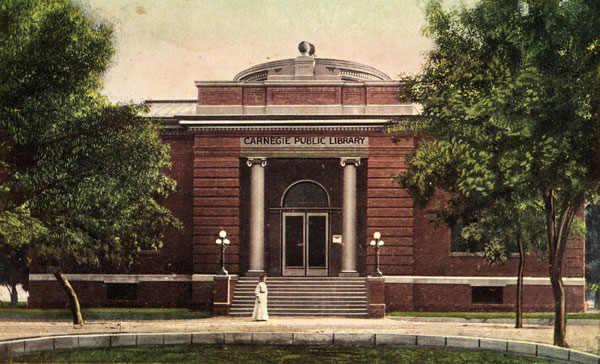
The beginning of the 20th century marked the start of expansion for American libraries. A nationwide movement to establish county library systems began in 1898. This coincided with the spread of branch libraries, which began to appear in large cities in the early 1890s. The growing number of library buildings was due in large part to Andrew Carnegie, who built libraries in 1,412 communities. The first part of the century also saw a broader range of services as librarians reached out to groups that had previously been ignored by the library: children, immigrants, minorities, soldiers, the sick and the handicapped, the working class, and isolated rural community dwellers.
As the face of the typical library patron changed, the concept of “library” quickly evolved to meet the increasingly specialized needs of library users. As the editors of the 1901 edition of Public Libraries put it, “the day of one colossal building…standing more for a place of exhibition and resort for scholars of leisure than a people’s university is certainly passing.” The new library, re-envisioned as a bastion of democracy rather than a sanctuary for elitist scholarship, would provide information wherever it was needed, and to whomever needed it.
Nowhere was this notion more evident than in the numerous small deposit libraries that cropped up all over–in general stores, on factory floors, in drugstores, churches, even in fire stations.
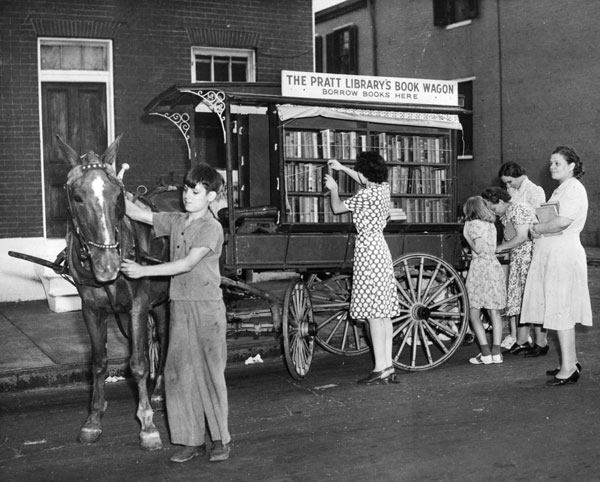
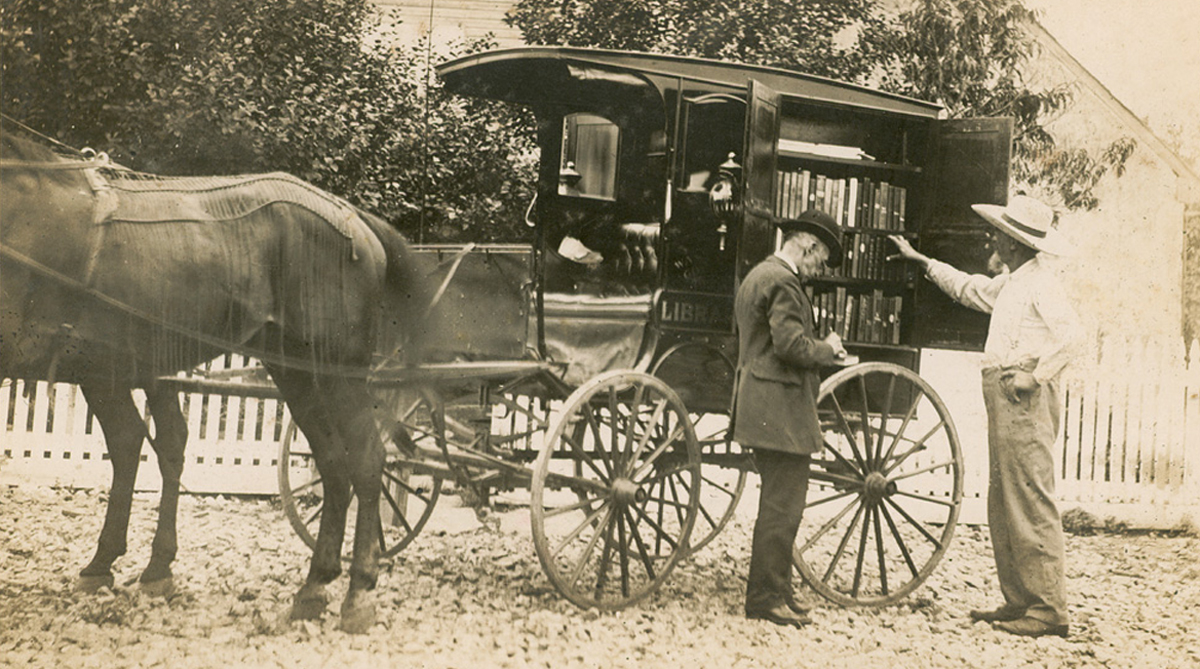
Then, in 1904, the Washington Country Free Library in Hagerstown, Maryland purchased a horse and wagon to reach depot stations not covered by trains or trolley. Mary Titcomb, Washington County’s librarian, reasoned that the wagon could function as a library unit rather than just a mechanism for delivery. Shelves were mounted in cabinets on the sides of the wagon. The bookmobile was born, and the era of the traveling library had begun.
You can learn more about the history of bookmobiles at the ALA Archives.
How you can support libraries
With library funding being gutted and censorship on the rise, supporting libraries is more critical than ever. If you’re looking for a way to help, we urge you to become a Supporter of the American Library Association by donating.
At the American Library Association, we are here to protect libraries — today and for generations to come. What does your donation do? It helps a neighbor gain skills to start a business. It helps a child discover themselves through books and programs. And it helps keep libraries strong, open, and free for everyone.
Become a Supporter
Subscribe to the I Love Libraries newsletter! You’ll get news from the library world, advocacy updates, author interviews, book lists, and more delivered to your inbox every month.
Photo: Washington County Free Library bookmobile, via Washington County Free Library.