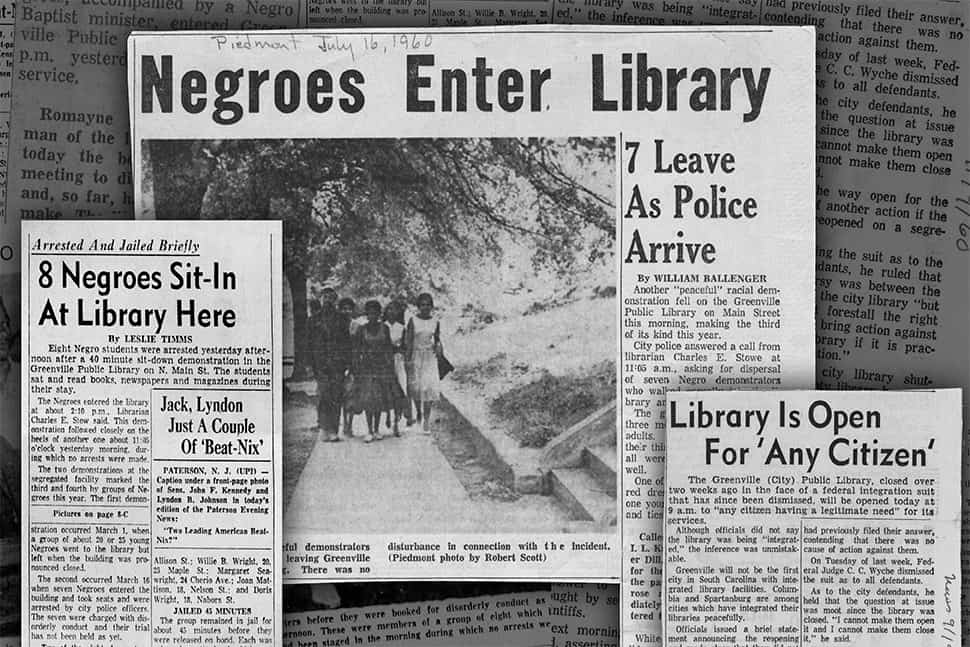
In 1960, on a visit home to Greenville, South Carolina, during a college break, 18-year-old freshman Jesse Jackson entered the whites-only Greenville County Public Library, accompanied by a group of African American high school and college students. Jackson and his group started browsing, sat down, and began to read, as should be the right of any community member. A few minutes later, the police arrived to arrest them for “disorderly conduct.”
Though he would become known internationally for an extraordinary and broad career as a movement leader and advocate for racial and economic justice, the late Reverend Jesse Jackson (1941-2026) has long occupied an essential place in the history of America’s libraries as one of the Greenville Eight, arrested for demanding dignity and respect in his community’s public library.
The 18-year-old Jackson and his fellow students were instrumental in pressing for the desegregation of Greenville’s public libraries, an outcome achieved through litigation and public pressure in the months following their arrest. The American Library Association (ALA) deeply mourns Jackson’s passing and celebrates the legacy he created.
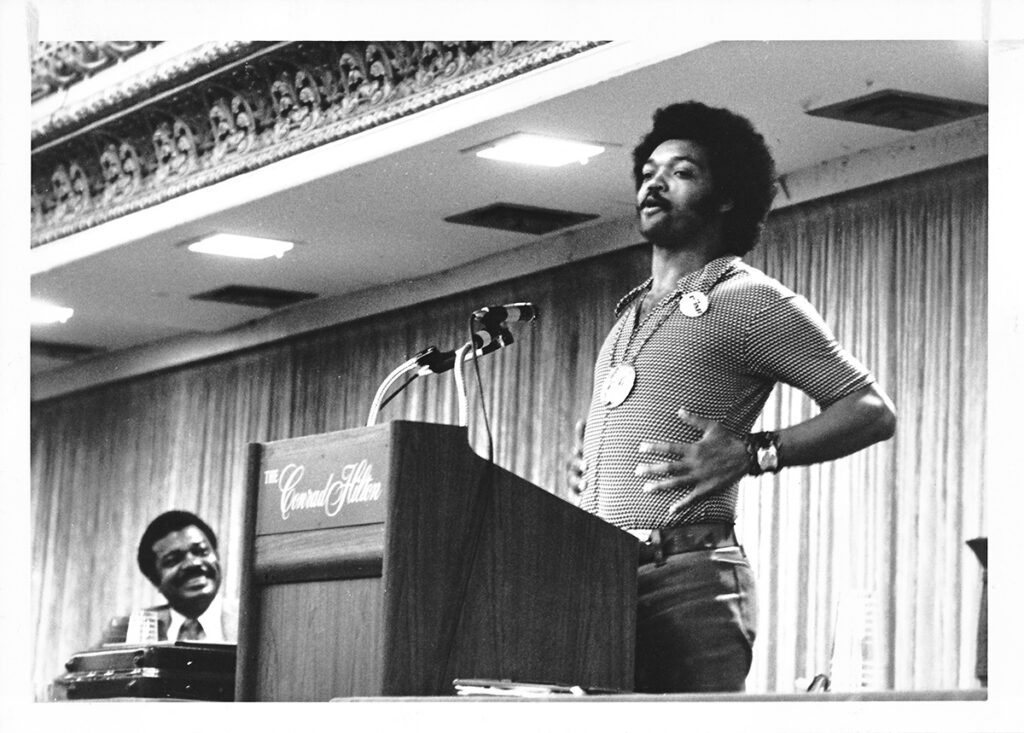
Throughout his remarkable life of activism and public service, Jackson consistently championed libraries as centers of knowledge where individuals and communities can learn about their past, present, and future. In 1972, Rev. Jackson, then involved with Operation PUSH (Program to Save Humanity), was presented with the Black Caucus Award for Distinguished Service to Humanity by past Black Caucus chairman E. J. Josey at the ALA Annual Conference in Chicago, where he spoke to a filled ballroom of attendees about the need for change in the library.
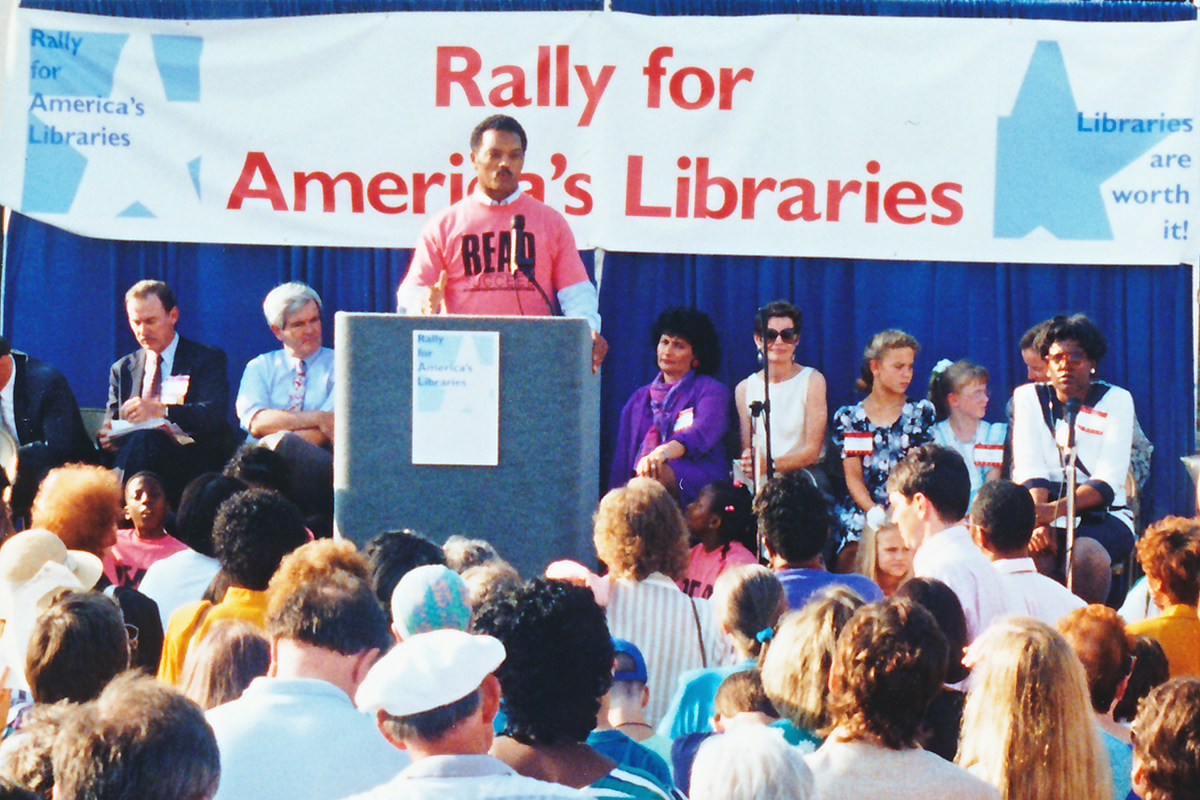
Jackson would continue his work supporting libraries alongside ALA for years. In 1991, he shared the stage with authors Judy Blume and Michael Blake, then-House Minority Whip Newt Gingrich, and Kansas City Chiefs linebacker Derrick Thomas at ALA’s 1991 Rally for America’s Libraries in Atlanta. And in 2009, he joined ALA’s executive director Keith Michael Fiels for a reading event to kick off National Library Week, discussing libraries’ role as community hubs of literacy and learning.
From his earliest foundational activism that helped change America—and America’s libraries—in profoundly important ways, to his lifelong dedication to empowering everyone who calls this country home, Jackson did not stray from his basic demands of dignity and equality.
To learn more about library and ALA history and how ALA is celebrating its 150th anniversary, visit ala150.org.
Ian Ware is a communications manager at ALA’s Public Policy and Advocacy Office in Washington, D.C.
How you can support libraries
With library funding being gutted and censorship on the rise, supporting libraries is more critical than ever. If you’re looking for a way to help, we urge you to become a Supporter of the American Library Association by donating.
At the American Library Association, we are here to protect libraries — today and for generations to come. What does your donation do? It helps a neighbor gain skills to start a business. It helps a child discover themselves through books and programs. And it helps keep libraries strong, open, and free for everyone.
Become a Supporter
Subscribe to the I Love Libraries newsletter! You’ll get news from the library world, advocacy updates, author interviews, book lists, and more delivered to your inbox every month.