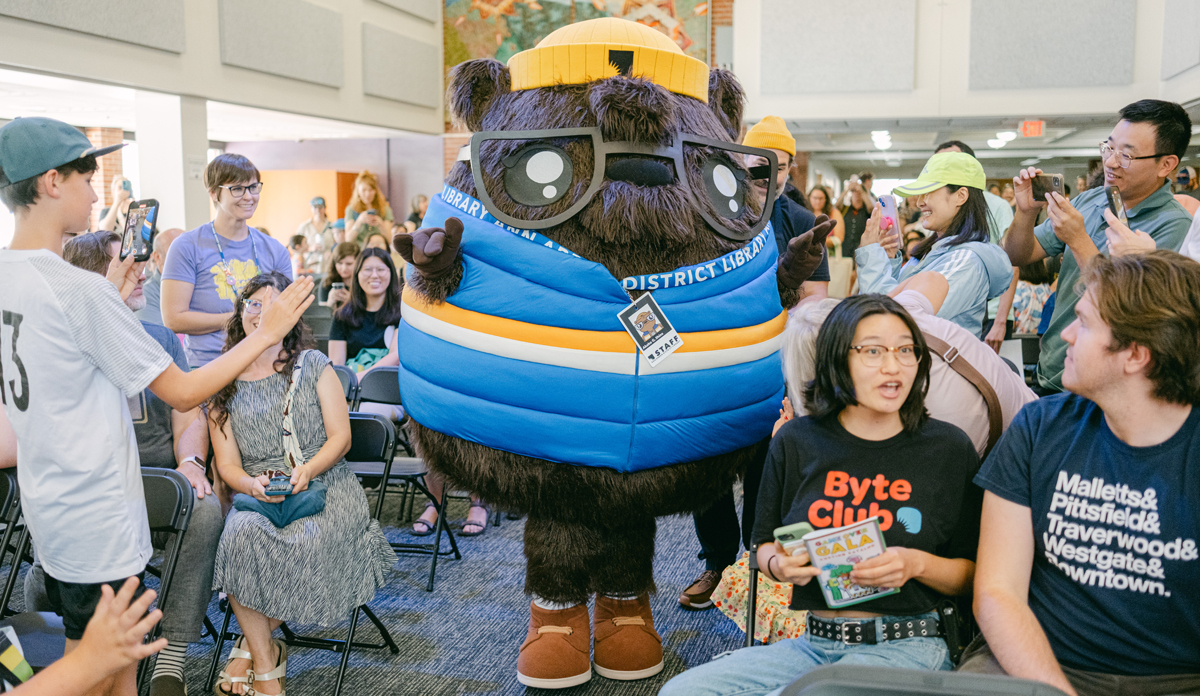
City dwellers are used to seeing lawn signs for politicians, schools, or reminders to pick up after your dog. But during the summer in Ann Arbor, Michigan, a different kind of sign begins sprouting up across the city. These colorful, circular signs aren’t for an upcoming election but instead “lawn codes” for the Ann Arbor District Library’s (AADL) Summer Game.
A summer-long library event that has activated an entire community, created proud library users, and even sparked a marriage, the Summer Game is everywhere you look in Ann Arbor, running from the last day of school in June through the end of August. Playable across various community points from school buses to public parks, museums, storefronts, and the library’s catalog, the Summer Game has become a community tradition since 2011.
How the game works
There are three ways to play: the classic summer reading game where reading books earns you prizes, explorer codes found at locations across the city, and online codes hidden in AADL’s online catalog or website. The multiple entry points make it accessible to all ages and interests.
While there is a Summer Game leaderboard and some players aim to crack the top ten, the library doesn’t emphasize competition and there isn’t one true winner. Most players simply want to “scratch the puzzle-solving itch,” says Emily Murphy, librarian at AADL and one of the minds behind the game.
The summer reading component remains central as the game originated from a desire to amplify this traditional reading challenge, and some participants choose to play only that way. Explorer and online codes, however, immerse players both physically and virtually in Ann Arbor and across all AADL branches.
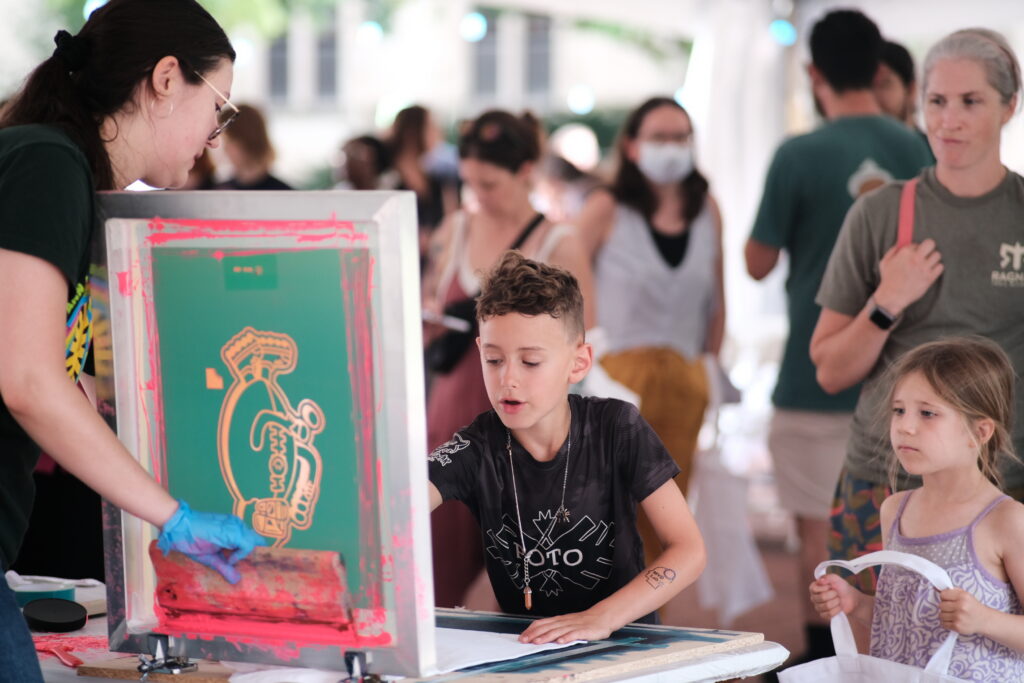
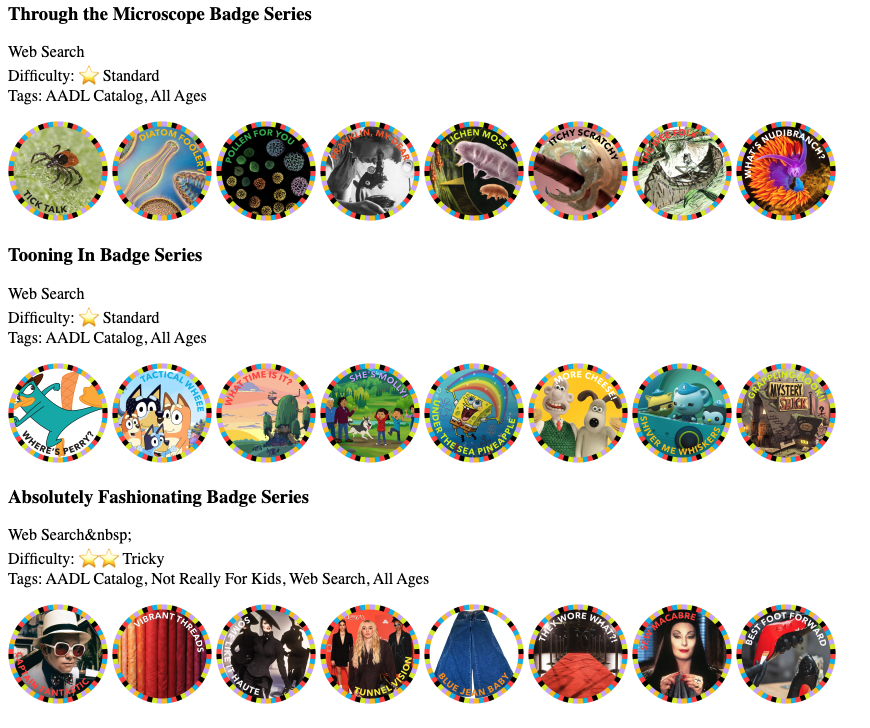
Players earn points by entering codes found throughout the challenges, which can be redeemed for prizes in an online shop, as well as badges for solving puzzle challenges.
“We aren’t putting up new signs for codes in parks or museums,” Murphy says. “But the clues and codes align with what is already there, like a word on a plaque or part of a mural. We have to ask ourselves: what cool things in the community have words that we can use for scavenger hunts?”
AADL staff also conduct school visits in May to promote summer library programs. Each Ann Arbor public school gets its own unique code for students to kick off gameplay.
How is this even put together?
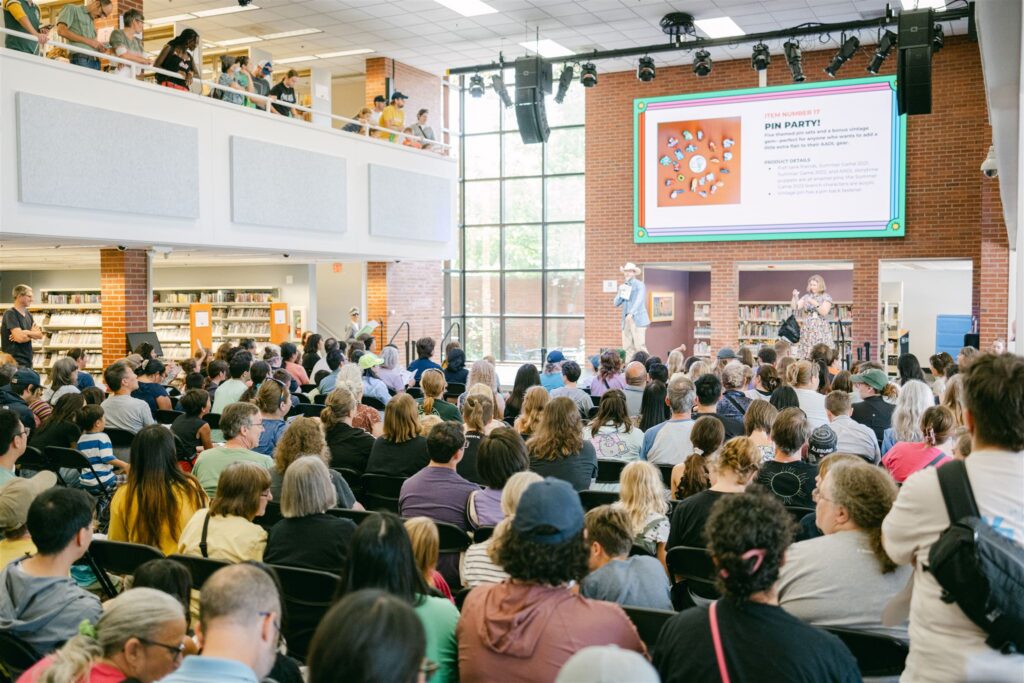
Planning for an event that reached 17,000 players in 2025, and continues to grow, begins early and takes many staff members. Murphy was already writing puzzles and creating challenges in mid-February for the summer program. As summer approaches, Murphy says, “it becomes a whole library thing.”
Even out of season, enthusiasm in the community about the program – and the library – stays high, with free prizes players can get excited for such as plushies, posters, and t-shirts. “The game builds its own hype,” Murphy says, “We want people to show off their prizes not because they were free, but because they’re proud. We do sneak peeks ahead of time, but it markets itself year-round.”
Fun for everyone
When AADL pivoted its traditional summer reading challenge to the Summer Game in 2011, it changed how people experience the library. And as more players discover the game, library staff work to ensure it remains accessible for everyone, including those whose first language isn’t English. Hints help players unfamiliar with certain idioms.
“People are coming to the library for fun, not something academic,” Murphy says. “But they’re still learning how to use the catalog and explore all our branches and resources.”
You also don’t need to live in Ann Arbor to participate. The 2026 Summer Game launches on June 9 and can be played digitally from anywhere (though you’ll need to plan a visit to Ann Arbor to pick up your prizes)!
Interested in starting a similar program at your library? Check out Programming Librarian for more details on how the AADL Summer Game works! This story first appeared in Programming Librarian on March 20, 2026.
How you can support libraries
With library funding being gutted and censorship on the rise, supporting libraries is more critical than ever. If you’re looking for a way to help, we urge you to become a Supporter of the American Library Association by donating.
At the American Library Association, we are here to protect libraries — today and for generations to come. What does your donation do? It helps a neighbor gain skills to start a business. It helps a child discover themselves through books and programs. And it helps keep libraries strong, open, and free for everyone.
Become a Supporter
Subscribe to the I Love Libraries newsletter! You’ll get news from the library world, advocacy updates, author interviews, book lists, and more delivered to your inbox every month.
Photos: Lisa Giannotti, courtesy of Ann Arbor District Library.