Mackenzee Grzesiak, former reference librarian at Alpha Park Public Library in Peoria, Illinois, was watching HBO’s “Last Week Tonight with John Oliver” in 2022 when she connected her work on the library’s podcast to the episode’s coverage of America’s current mental health crisis.
“Oliver was talking about how mental health services in the U.S. are at full capacity right now and don’t provide sufficient or specialized care,” says Grzesiak. “He talked about how many institutions were shut down a few decades ago and nothing ever came along to adequately replace them. It got me thinking about Peoria State Hospital, the subject of our library’s podcast.”
Funded by ALA’s American Rescue Plan: Humanities Grants for Libraries, Alpha Park Public Library’s seven-part “Stories from the Bowen Building” series dives into the fascinating history of the Peoria State Hospital, which closed in 1973. “We didn’t set out to shine a light on mental health,” Grzesiak says, “but with mental health being such an important topic right now, the podcast project couldn’t have come at a better time.”
Part oral history and part advocacy, the podcast shares first-person accounts of how the institution played an important role in the history of the community and in the humane housing and treatment of people with mental illness.
Grzesiak, along with outreach librarian and interim director Heidi Rhea, spoke with me about the podcast and why preserving the stories of the hospital will benefit the wider community.
Why did you select Peoria State Hospital as the topic for your podcast?
Rhea: The initial goal of the podcast was to incorporate our community’s aging population back into the fold since the pandemic dismantled many socialization networks. And, many older people in our area worked for Peoria State Hospital when it was open.
Grzesiak: Many of our patrons and locals know about the hospital and the hospital grounds. There are a lot of interconnected stories from those who worked there that we wanted to tell. Since they are getting older now, mostly in their 70s, 80s, and 90s—we just interviewed a 101-year-old, too!—they felt very appreciative of us reaching out to them and asking for their stories.
Rhea: The Peoria State Hospital is the perfect topic for a podcast because it’s the story of a community coming together to take care of one another. It’s evident that the interviewees never lost the compassion they had for their work and their patients. The hospital was a huge part of their own stories and the wider story of our community. These people were pioneers of mental health!
How was the hospital a pioneer of the mental health field? Did you learn anything new when speaking with the interviewees?
Grzesiak: Despite how this type of hospital—which was then commonly referred to as an “insane asylum”—was viewed, Peoria State Hospital was totally different from what one might picture a mental health institution from the early 20th century to look like.
Patients at Peoria State were not locked up, sedated or restrained. It was funded by the Peoria Women’s League, and the doctor who founded the facility, Dr. George Zeller, provided humane treatment that was unseen at the time. His impact and humane treatment methods lasted decades after his passing, until the hospital closed in the 1970s.
Rhea: Today, when we want to look back and learn about the history of this institution, we are mostly met with the supernatural. Because it’s an old building that is still standing, alleged spirit sightings have made the building a tourist spot for ghost hunters.
We want the podcast to shed light on the good work that came out of the building and prioritize the stories of the patients and staff over the supernatural stories. We need to get these real stories down and clarify that what happened there was not torture or anything like that, but those in the building were a family of staff and patients that were given groundbreaking mental healthcare.
The podcast is coming full circle with today’s mental health crisis. Dr. Zeller’s philosophy was very one-on-one and purposeful. Today, it looks like we have come to the point where it is rare for patients to find a treatment that is personalized. It’s like we need another pioneer like Dr. Zeller.
Grzesiak: A heartwarming thing that came from this podcast was the perspective shared from all those interviewed about how much they cared for their patients. It’s evident the major impact the institution had and continues to have on the community. Previous staff still clearly remember patients and share hilarious, beautiful and sad stories.
I want listeners of the podcast to change the way they feel or think about institutions from that time. It will hopefully allow us to bring more humanity to the way we discuss the mental health epidemic of today.
I can’t wait to hear the full series! You worked with some high school interns. How did they get involved?
Rhea: We wanted this project to be intergenerational to bring us back to that initial goal of engaging our aging population. Our three high school interns came up with their own questions and conducted their own interviews.
We had someone come in to teach them proper interview skills. These lessons, paired with conducting their own interviews for the recording and sitting in on interviews, was a huge training for them. They learned practical skills that they will use forever.
Getting young community members involved is a great thing, and the older interviewees felt very honored by the recognition.
Read the full story with tips on how to create your own podcast at Programming Librarian.
Become a Supporter
How you can support libraries
With library funding being gutted and censorship on the rise, supporting libraries is more critical than ever. If you’re looking for a way to help, we urge you to become a Supporter of the American Library Association by donating.
At the American Library Association, we are here to protect libraries — today and for generations to come. What does your donation do? It helps a neighbor gain skills to start a business. It helps a child discover themselves through books and programs. And it helps keep libraries strong, open, and free for everyone.
Subscribe to the I Love Libraries newsletter! You’ll get news from the library world, advocacy updates, author interviews, book lists, and more delivered to your inbox every month.
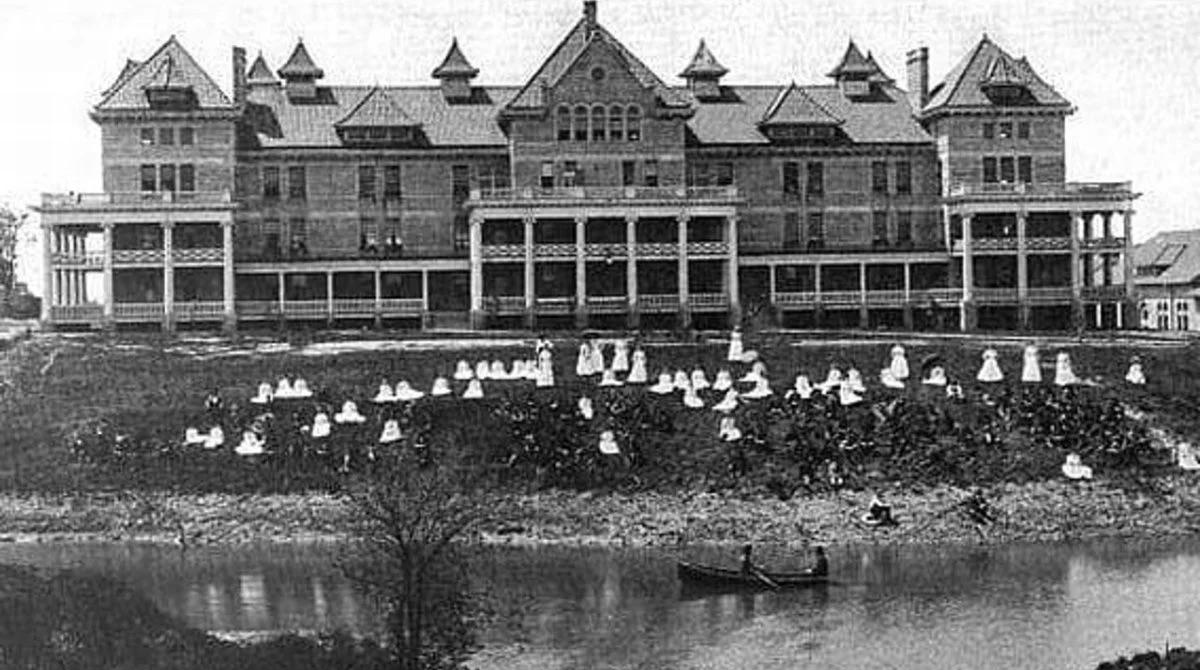
Photo: Archival image of Peoria State Hospital’s Bowen Building.