Libraries and schools across the country are experiencing unprecedented levels of attempts to ban or remove books from their shelves. I Love Libraries will continue to raise awareness by highlighting attempts to censor library materials, as well as efforts by librarians, parents, students, and concerned citizens to push back against them. This update includes news from Massachusetts and Utah and a look at how a superstar pop singer is fighting book bans.
Become a Supporter
Massachusetts House passes bill safeguarding libraries from book bans
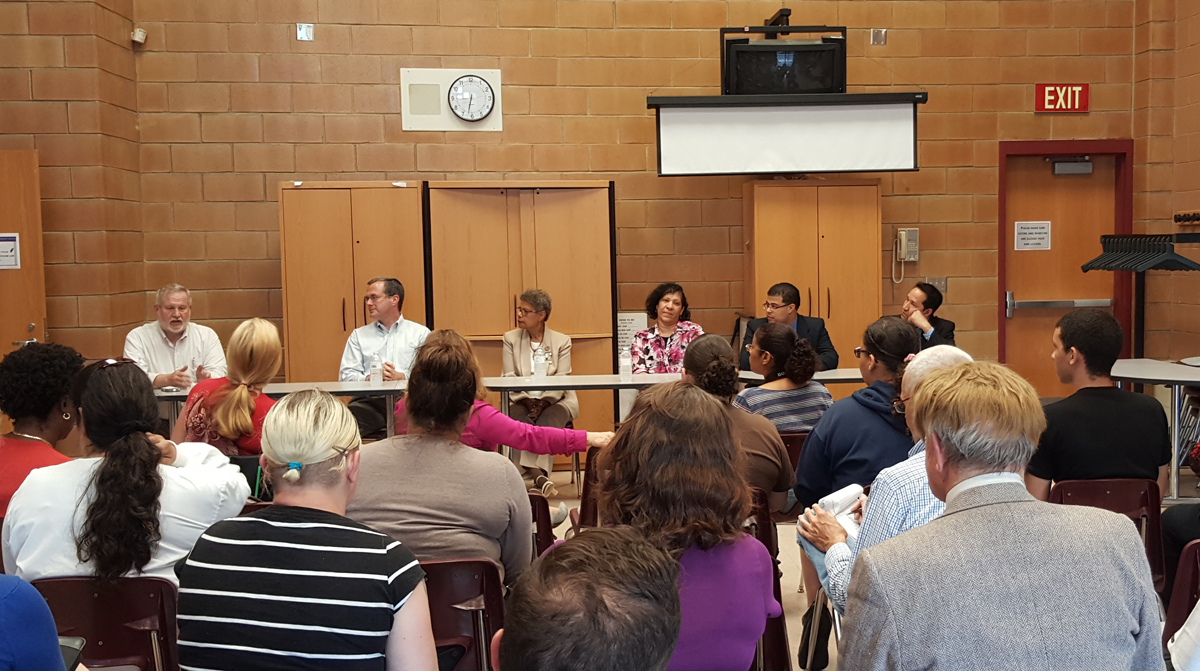
On June 10, the Massachusetts House passed a bipartisan bill designed to protect access to books in school and public libraries, reports WGBH.
The bill requires every school in Massachusetts to adopt a library policy that includes criteria for handling book challenges. Rather than a challenge going directly to the school committee, the committee and the school must appoint a review committee made up of school personnel to review the book in question. The review committee would then hold a public hearing and make a recommendation to the school committee, which would vote on the book’s removal.
The bill gives school librarians primary authority over selecting library materials and stipulates that the librarian’s book selections can’t be overruled unless there is “clear and convincing evidence” that the book is “devoid of any educational, literary, artistic, personal or social value,” or isn’t age-appropriate for any child at the school. During this process, the book would remain on the shelf.
Last year, Massachusetts was sixth in the nation in the number of book challenges, resulting in more than 200 titles being banned or censored.
Elementary school students mobilize to oppose book bans
Fifth graders at Fort River Elementary School in Amherst, Massachusetts, took a stand against book bans on June 3 by hosting a Banned Book Event to raise awareness about the issue and restrictions on reading access, reports the Amherst Indy.
Authors Megan Dowd Lambert and Breanna McDaniel, both of whom have had their books banned or challenged, joined the students at the event held at the Fort River Elementary School library.
When asked about their experiences having their books banned or challenged, the authors spoke of the effects of those actions.
McDaniel described the banning of her debut picture book, “Hands Up!” (2019, Turtleback) which was banned in a widely publicized book ban in York, Pennsylvania. The author said she feared she would never be published again.
“The things people were saying about the books that were banned were not true, and it was really hard to hear that my book was being taken out of schools and libraries because people felt that it would hurt children with the ideas in it,” McDaniel said. “I cried quite a bit and I worried that more book bans would come, which they did.”
The authors’ testimonies had an impact on the students.
“I believe that banning books not only takes away hard work from an author, but it also makes it harder to learn about other traditions and opinions,” said fifth-grader Miriam Goren-Watts. “If someone worked really hard writing or illustrating that book, it could make them feel like they did all that work for nothing.”
The students are also working to pass “An Act Regarding Free Expression” in the Massachusetts State Legislature. The bill was passed by the State Senate (S.2696) in November and is awaiting action by the House of Representatives (H.3594) before the end of the legislative session.
“If passed, the bill would make it harder for people to ban books in Massachusetts,” said fifth-grader Eleanor Green. “We hope this extra protection will keep books on the shelves and make sure kids like us can always find characters they identify with.”
Utah has banned a 35th book from all public schools
Another book has landed on Utah’s growing list of titles banned from all public schools in the state, “Lucky” by Alice Sebold, reports the Salt Lake Tribune.
Sebold’s 1999 memoir chronicles her recovery after being raped and beaten when she was an 18-year-old college freshman at Syracuse University. In the autobiography, she details how she navigated her survival as she fought to bring her alleged attacker to justice.
“Lucky” was officially banned June 5 from public school shelves statewide after the Davis, Granite, Tooele County and Washington County school districts removed it. The removal brings the total number of titles banned from all Utah public schools to 35. It also marks the second memoir focused on surviving sexual abuse to be added to the list.
Utah law requires that a book be removed from all public schools in the state if at least three school districts (or at least two school districts and five charters) determine it amounts to “objective sensitive material” — pornographic or otherwise indecent content, as defined by Utah code.
State officials typically do not cite the details of a book’s content when placing it on the banned list. However, the list does note that “Lucky” was only available to students in grades nine through 12.
Popstar Dua Lipa opening physical library for banned and censored books
Singer Dua Lipa has partnered with Livraria Lello in Porto, Portugal, to open a physical library for banned and censored books, reports Consequence of Sound.
The Manifesto Library is dedicated to books “that challenge power, censorship, exclusion, and dominant narratives.” The library, which opened June 27, is located in Livraria Lello’s new cultural auditorium, designed by Pritzker Prize-winning architect Álvaro Siza. The library was also conceived “as a living cultural space for reading, debate and public reflection,” per a press release.
“Reading the world brings us closer—but sadly, not everyone is in favour of that,” Lipa explained in a statement. “Here you will find one hundred books that ask questions, or have been questioned. Some have been banned by school districts for themes of race or sexuality. Others, written for LGBTQIA+ readers, have been restricted from display. In some cases, the author has paid for their words with their life.”
“This library is a shrine to books that have disappeared, to authors whose courage unmasks structures of power and control, and to readers who refuse to be told what book they are allowed to read,” she added. “You are invited to visit and decide for yourself what belongs on these shelves. Because sometimes the most subversive thing you can do is read a book and then talk about it.”
Take action
Alarmed by the escalating attempts to censor books? Here are six steps you can take now to protect the freedom to read.
- Follow news and social media in your community and state to keep apprised of organizations working to censor library or school materials.
- Show up for library workers at school or library board meetings and speak as a library advocate and community stakeholder who supports a parent’s right to restrict reading materials for their own child but not for all
- Help provide a safety net for library professionals as they defend intellectual freedom in their communities by giving to the LeRoy C. Merritt Humanitarian Fund.
- Educate friends, neighbors, and family members about censorship and how it harms communities. Share information from Banned Books Week.
- Join the Unite Against Book Bans movement and visit our Fight Censorship page to learn what you can do to defend the freedom to read in your community
- Become a Supporter of the American Library Association and help ALA fight for libraries and everyone’s freedom to read.
Subscribe to the I Love Libraries newsletter! You’ll get news from the library world, advocacy updates, author interviews, book lists, and more delivered to your inbox every month.