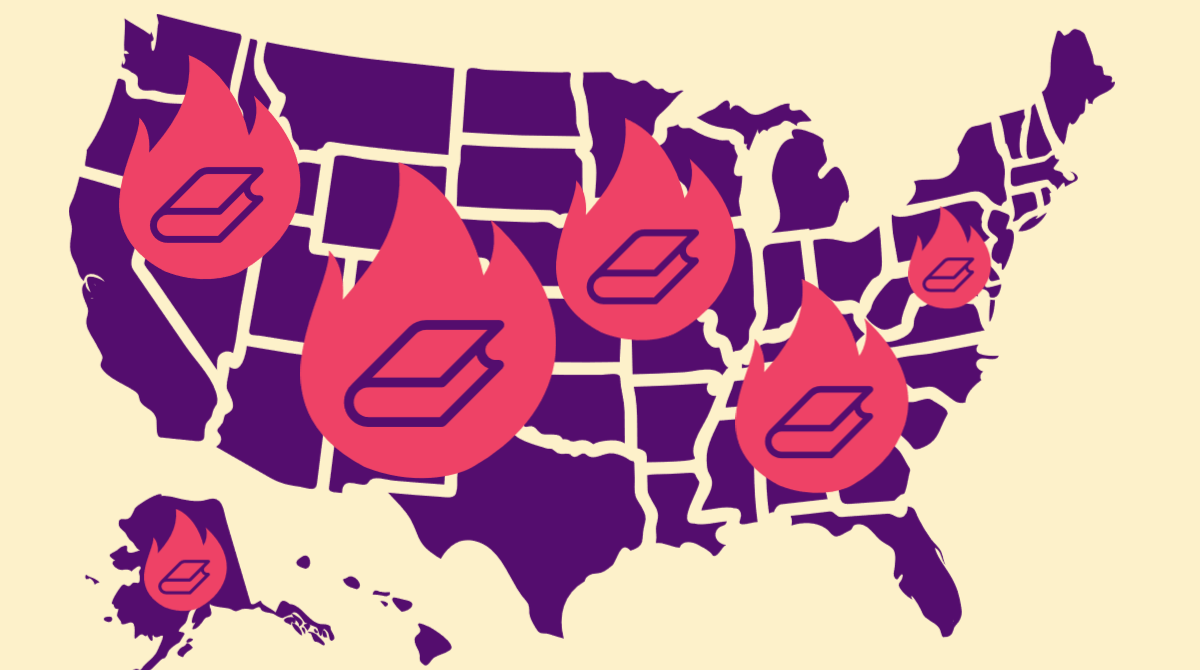
Libraries and schools across the country are experiencing unprecedented levels of attempts to ban or remove books from their shelves. I Love Libraries will continue to raise awareness by highlighting attempts to censor library materials, as well as efforts by librarians, parents, students, and concerned citizens to push back against them. This update includes news from Arkansas, Utah, and Texas.
Become a Supporter
Arkansas librarians grapple with enforcing book restriction law after court ruling
Library directors in Arkansas have unanswered questions about how a 2023 state law restricting access to library materials will be enforced after a federal appeals court ruled that it can go into effect, reports the Arkansas Advocate.
The 8th U.S. Circuit Court of Appeals lifted the injunction on two sections of Act 372 on July 30 but the formal order for the ruling to take effect hasn’t been issued yet. The two sections create criminal liability for librarians who distribute content that some consider “obscene” or “harmful to minors,” and give city and county governing bodies the final say over library content.
One section of Act 372 states that anyone who “furnishes, presents, provides, [or] makes available” an item that is “harmful to minors” can be charged with a Class A misdemeanor, punishable by a prison sentence of one year.
U.S. District Judge Timothy Brooks wrote in December 2024 that the law’s lack of specificity for terms like “furnishing” and “harmful” would create “burdens on public access to speech” that violate the First Amendment.
The law has led libraries across the state to take preventative measures ranging from limiting minor patron’s access to manga and certain graphic novels to putting stickers on books with sexually explicit prose as a warning that minors can only access those books with parental permission.
Adam Webb, executive director of the Garland County Library and president of the Arkansas Library Association, said he hopes the appeals court’s mandate comes with clarity on how to enforce language that a lower court deemed unconstitutionally vague.
“We’re trying to figure out exactly what ‘harmful to minors’ would mean in the context of books when an 8-year-old can read a book, but we’re not sure if they understand all the concepts that could be in an adult fiction book,” said Webb.
Utah just banned the book that inspired the hit film ‘Precious’ from all public schools
Utah’s first book ban of the new school year is in, and it’s “Push” by Sapphire, reports the Salt Lake Tribune.
“Push” got cut across the state on August 19 after Davis, Granite, and Washington County school districts removed it, bringing the total number of books banned from public schools in the state to 37.
Sapphire’s 1996 novel follows Precious Jones, an illiterate 16-year-old growing up in Harlem, New York, and the abuse that she endures from her family, including becoming pregnant by her father, before meeting a teacher and learning how to write and tell her own story.
In Utah, the law requires that a book be removed from all public schools in the state if at least three school districts (or at least two districts and five charter schools) determine it amounts to “objective sensitive material” that meets state definitions for pornographic or otherwise indecent content.
State officials typically do not cite the details of a book’s content when placing it on the statewide banned list. However, on Davis School District’s website, the committee charged with reviewing challenged materials said the book “has no serious value for minors.”
“‘Push’ is a book about the awakening and healing of a violent and violated child,“ Sapphire wrote on her website. ”Through acts of love, demonstrated by her teacher and classmates, she becomes an academic success story and a proud, loving mother.”
Sapphire continued: “When we ban books like ‘Push,’ we are in danger of falling into the sinkholes of hate and prejudice and ignorance and of losing what little love we have left for each other.”
Texas lieutenant governor proposes penalties for schools that keep “vulgar” books on library shelves
Texas Lt. Gov. Dan Patrick has vowed to pass legislation punishing public schools that do not remove graphic books from their shelves by knocking them down a notch in the state’s annual school performance ratings, which the state uses to seize control of underperforming districts, reports the Texas Tribune.
The lieutenant governor said on August 19 that school boards and administrators have not been following a 2025 law aimed at weeding out lewd books from the shelves in Texas’ more than 9,000 campuses attended by some 5.5 million schoolchildren.
Senate Bill 13 grants school boards the authority to approve and remove books based on complaints they receive, such as those from parents and activist groups. Before, those powers largely belonged to school librarians. Patrick said an overwhelming majority of school boards have not taken any action, as the law nears one year in effect.
“It’s the law and we expect you to follow the law. So we’re coming for the books,” Patrick said during a news conference. “We ask that you do it on your own and remove these books.”
Librarians and childhood literacy advocates have contended, throughout fights at the Texas Capitol and in school boardrooms across the state, that some of those books are important for students who may not see their lived experience reflected in other literature and/or can’t afford to buy them.
Texas school board votes on book bans for middle and high school libraries
Lubbock Independent School District (LISD) held a special board meeting on August 19 to discuss banning certain books from LISD libraries after a Turning Point USA press conference over the school’s library materials, reports Everything Lubbock.
After hearing from the school’s parents and community thoughts on the proposed ban, LISD’s board voted on whether several books would be banned from LISD libraries. The vote resulted in books like “Me and Earl and the Dying Girl,” by Jesse Andrews, “Heroine” by Mindy McGinnis, “ and The Lovely Bones” by Alice Sebold, and more being removed from the middle school library. High schoolers will still have access to these books.
Some local parents have said these books can help students learn about real-life situations and topics they’ll eventually have to navigate as they get older.
Take action
Alarmed by the escalating attempts to censor books? Here are six steps you can take now to protect the freedom to read.
- Follow news and social media in your community and state to keep apprised of organizations working to censor library or school materials.
- Show up for library workers at school or library board meetings and speak as a library advocate and community stakeholder who supports a parent’s right to restrict reading materials for their own child but not for all
- Help provide a safety net for library professionals as they defend intellectual freedom in their communities by giving to the LeRoy C. Merritt Humanitarian Fund.
- Educate friends, neighbors, and family members about censorship and how it harms communities. Share information from Banned Books Week.
- Join the Unite Against Book Bans movement and visit our Fight Censorship page to learn what you can do to defend the freedom to read in your community
- Become a Supporter of the American Library Association and help ALA fight for libraries and everyone’s freedom to read.
Subscribe to the I Love Libraries newsletter! You’ll get news from the library world, advocacy updates, author interviews, book lists, and more delivered to your inbox every month.