This Outdoor Escape Room Brings the Social-Distanced Fun

Escape rooms in libraries are popular activities for families, providing free, interactive entertainment for people of all ages. But unfortunately, COVID-19 has put in-person library programs on hold. Some librarians have found creative ways to safely continue the fun during the pandemic, like Sydney Krawiec at Peters Township Public Library in Pennsylvania, who created a Google Doc-based Harry Potter escape room that anyone can play online. Wisconsin’s McMillan Memorial Library has taken a different approach: staff set up a no-touch, outdoor escape room that community members can enjoy while maintaining social distancing.

McMillan started hosting in-person escape rooms back in 2019. Their early efforts-including a Mario-themed escape room and a game based around a janitor’s closet-were a huge hit, so staff had been all set to continue the fun for summer 2020 when the pandemic hit. Still, the McMillan team was determined to find a way to keep their community engaged during COVID, so staffers Karmen Kelly, Alicia Lamont, and Deb Drollinger set about creating a quarantine-friendly escape room.

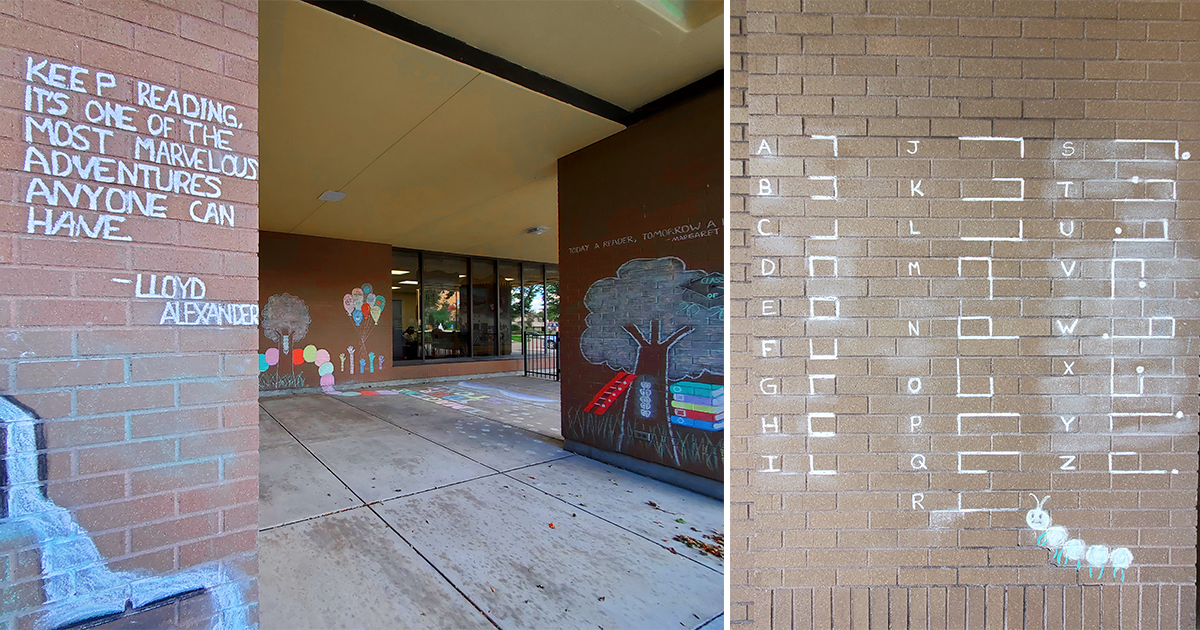
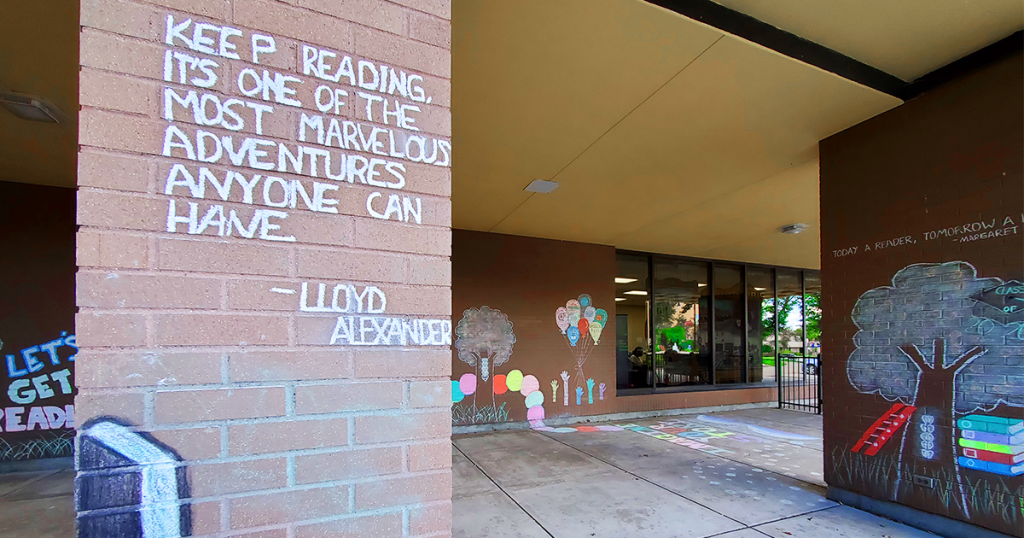
They found a home for the escape room in a rarely used corridor outside the library, which they’ve decorated using sidewalk chalk. While traditional escape rooms tend to have players manipulate locks and other physical props, this one is touch-free for the safety of participants. Instead, they interact with the game through an online form on their own mobile devices as well as a set of game pieces that they can take home afterward. Their mission? Figure out the relationship between the game pieces and the chalk drawings in the space in order to spell out a word.


The McMillan staff based the escape room around the library’s 2020 summer reading theme, Imagine Your Story. “Since all of our stories are now connected through a common COVID thread, we decided to lean into all of the aspects of the pandemic,” Karmen Kelly told I Love Libraries. “The end result encourages the idea that this isn’t the story we would have imagined, but much like the caterpillar in the cocoon, we too can emerge stronger and better than ever. What we do now will allow us to become the proverbial butterfly as we imagine the next chapter of our story.” Fittingly, participants leave the escape room with crafting instructions for how to turn the game pieces they used into a model of a butterfly.

“It’s been such a morale booster for everyone involved, especially when we see the families that get to enjoy our creation,” Kelly shared. “In a world filled with masks, social distancing, fear, and confusion, it brings us so much joy to offer a positive team-building activity for our community to enjoy.”

For more inspiring stories about America’s libraries, subscribe to the I Love Libraries newsletter.

How Your Family Can Make the Most of Screen Time During the Pandemic

With people everywhere staying home to curb the spread of COVID-19, individuals of all ages are turning to screens for entertainment, information, and socialization. While digital media has been a lifeline during these unprecedented times, parents and caregivers may be wondering what online videos, apps, and games are best for their families. Fortunately, your local children’s library professional is there to help you make savvy, informed choices for your household’s media consumption.

The Association for Library Service to Children (ALSC)’s #LookToLibraries campaign shares extensive resources for how caregivers can lean on their libraries for media mentorship. Media mentors work with families to find high-quality videos and websites, share tips for digital privacy and information literacy, and create media plans for how and when to use screens at home. Library professionals are experts in these topics and are happy to connect with your family online or over the phone during the pandemic.

“Children’s library professionals know how to find high-quality content that reflects our diverse community’s experiences and grows young people’s understanding and empathy for others,” Claudia Haines, youth services librarian at Alaska’s Homer Public Library, told I Love Libraries. “We appreciate the unusual circumstances many families find themselves in as a result of the pandemic and consider families’ unique experiences when recommending resources and offering learning programs in different formats.”

Library staff are also uniquely equipped to help others in their community learn media mentorship skills. “The most rewarding aspect of my media mentorship work right now is empowering teens to be mentors for each other and younger kids,” Haines shared. “In the process, they are growing their own media literacy skills, advocating for youth in our community, becoming effective, empathetic communicators, and acting as positive role models.”

These are overwhelming times, but your library is here to support you during the pandemic and beyond; don’t be too hard on yourself if you need help managing your family’s screen time and media choices. “Everything you are feeling is OK. We are living in the midst of a global pandemic with no end in sight-you don’t have to keep it all together!” ALSC president Kirby McCurtis told I Love Libraries. “It’s hard to evaluate the sources and appropriateness for children quickly. Media mentors’ goal is not to judge, but to help parents and caregivers understand the context and if the content is right for their child.”

Visit the #LookToLibraries website for even more resources and materials. Plus, check out ALSC President Kirby McCurtis’s appearance on ABC’s “Pandemic: What You Need to Know” explaining how families can lean on children’s library professionals for support.

Our Favorite Ways to Celebrate Library Card Sign-up Month

We’re celebrating Library Card Sign-up Month (LCSUM) all September long-it’s an annual reminder that people of all ages can access infinite entertainment and information by registering for a free library card.

Library lovers across the country are joining the festivities by helping spread the word about the value of a library card. Here are a few ways you can participate:

Remind Your Loved Ones to Get Library Cards

Challenge yourself: how many friends, relatives, colleagues, and classmates can you persuade to register for a library card in September? Remind the people in your life that signing up for a library card is free and easy, since many libraries are allowing for online registration during the pandemic. Send them this article highlighting all the coolest benefits of having a library card to help make your case.

Join the Fun on Social Media

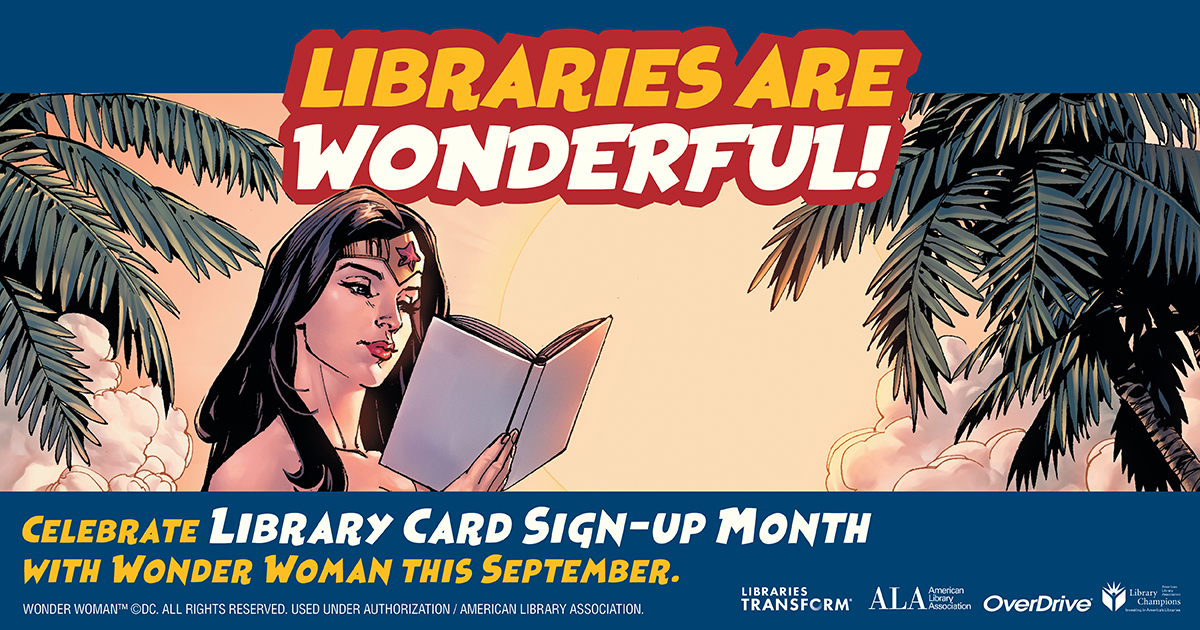
Libraries and their supporters are using the hashtag #LibraryCardSignUpMonth on Facebook, Twitter, and Instagram to help get the word out about the value of a library card. The Library Card Sign-up Month website has tons of sample social media posts and amazing graphics featuring LCSUM Honorary Chair Wonder Woman (!) available for free download.

Strike a Library Card Power Pose

The American Library Association is encouraging everyone to show off their library card superhero pose on social media. Post your pic on Twitter or Instagram using the hashtag #LibraryCardHero (or share directly to the I Love Libraries Facebook page) by September 22 and you’ll be automatically entered to win a $100 Visa gift card.

Show Off a Library-Themed Yard Sign

Let your neighbors know you’re a proud library card holder with these awesome yard signs from the American Library Association. Pick your favorite sign-options include “library card holders live here” and “in this house, we support libraries”-or design your own, then print and display to jazz up your yard.

Participate in Library Card Sign-up Month Bingo

How many squares on this LCSUM bingo card can you check off in September? It’s chock full of fun challenges to get in the Library Card Sign-up Month spirit, from using your library to access free digital magazines to writing a thank you note to your favorite librarian. Once you’ve hit bingo, show off your card on social media using the hashtag #LibraryCardSignUp.

Visit the Library Card Sign-up Month website for more ways to celebrate.

How Can Libraries Support the 2020 Election?

New York Times op-ed from sociologist Eric Klinenberg explores libraries how could help ensure a fair and just U.S. election by offering ballot collection boxes for patrons who wish to vote early.

Amid the ongoing pandemic, millions of Americans are planning to vote by mail rather than risk COVID-19 exposure at crowded polling places on Election Day. Still, many are their mail-in ballots may not arrive in time to be counted.

Klinenberg, a professor at New York University and author of Palaces for the People: How Social Infrastructure Can Help Fight Inequality, Polarization, and the Decline of Civic Life, argues that libraries can play an important role.

“Libraries already serve as polling places on Election Day throughout the country and, crucially, they provide secure, monitored ballot boxes where absentee voters can drop off their ballots before Nov. 3 and know that it will count,” he explains in the New York Times. “Secure boxes for absentee ballots are already available at some libraries in states like California, Colorado, Florida, Illinois, Utah, and Washington. Other states should follow suit.”

Ballot boxes allow voters to personally drop off their ballot in a secure setting all the way up until the polls close on Election Day. They give voters peace of mind, knowing that their ballot won’t encounter any delays or interference on the way to be counted.

America’s thousands of public libraries reach all types of communities and are among our nation’s most-trusted institutions. With that in mind, Klinenberg sees them as the perfect setting for early voting: “Making ballot boxes widely available at libraries and at accessible outdoor places is a safe and inexpensive way for government at all levels to promote our core civic duty.”

For more stories about the importance of libraries, subscribe to the I Love Libraries newsletter.

5 Reasons Everyone Should Have a Library Card

September is Library Card Sign-up Month-do you have a library card yet? If not, it’s never too late to sign up: people of all ages can benefit from the free resources, media, and programs available at their library.

While many libraries are still closed to the public due to the COVID-19 pandemic, you may still be able to register for a library card online. Then, you can access all kinds of free entertainment and information from the comfort of your home, all while safely maintain social distancing.

Here are a few of the coolest things about having a library card:

Free books galore

From mysteries and graphic novels to cookbooks and biographies, your library has something for readers of all ages and interests. The best part? In addition to physical copies, libraries offer instant online access to free ebooks and audiobooks, which you can download from home with the push of a button.

Movies, music, magazines, and more

Library card holders can check out way more than just books: many libraries also offer free access to streaming video and music as well as online versions of your favorite magazines and newspapers. These resources are great for staying entertained and can save you big money on media subscription fees.

Access to databases and courses

Libraries also offer extensive electronic resources for students, small business owners, job seekers, hobbyists, and lifelong learners. Whether you’re looking for free software to pick up a new language, coding tutorials to boost your resume, or patent records to develop a new invention, your library has free access to amazing databases and classes online.

Big savings on museums and cultural attractions

Some libraries also loan out free or discounted passes to local museums, National Parks, performance venues, and other cultural attractions. While you may not be able to spend time at a planetarium or art gallery during the pandemic, be sure to check out what opportunities are available from your library later on.

Supporting access to information for all

Libraries are among our country’s most democratic institutions, promoting free and open access to information for everyone. Registering for a library card is one of the easiest ways to support this mission, since libraries use their sign-up stats to prove their value to local policymakers and advocate for much-needed funding. When you sign up for a library card, you’re helping demonstrate that today’s libraries are more important than ever.

Visit the Library Card Sign-up Month website for ideas about how to get involved all September long.

“Moana” Star Auli’i Cravalho Encourages Everyone to Get Counted in the 2020 Census

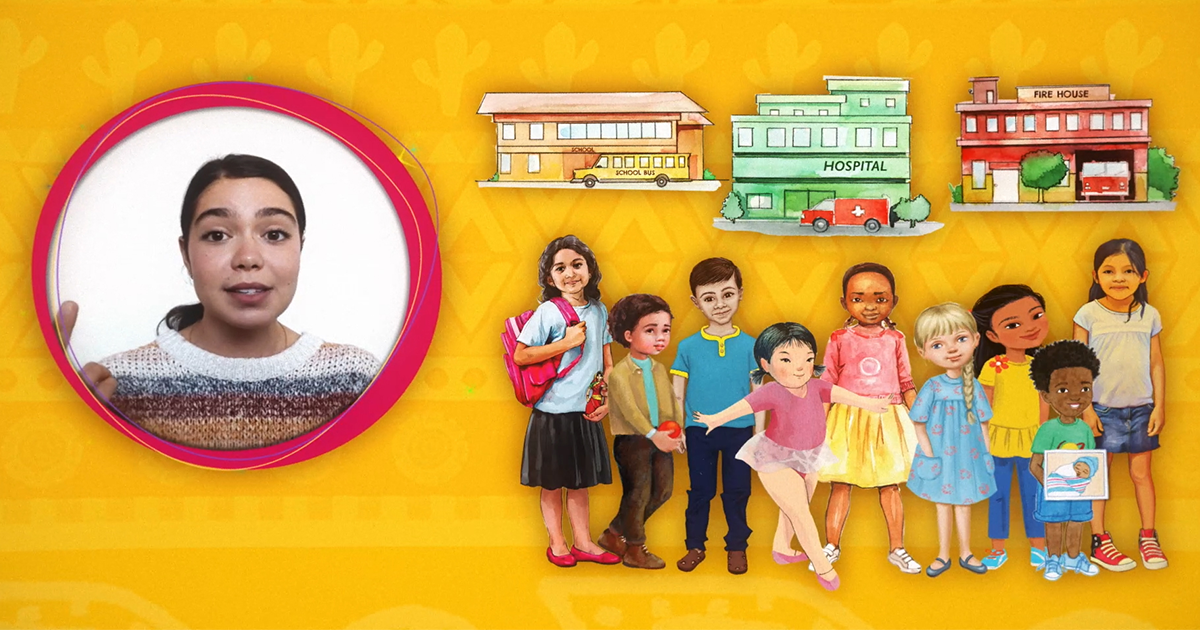
In a new read-along video from the American Library Association, Moana star Auli’i Cravalho shares why it’s so important for all of us to get counted in the 2020 United States Census.

In the video, she reads from WE COUNT! A Census Counting Book for Kids, (and the Grownups That Love Them), an interactive counting book with illustrations of diverse American families by artists representing their own cultural heritage.

“In the movie Moana the people of my island were counting on me, a young girl, to make a difference,” she shares. “Now our communities are counting on each and every one of us, young and old, to make a difference by taking the Census.”

The results of the Census will allocate billions of dollars in federal funding to local communities over the next decade, including more than $1 billion to libraries. The deadline for U.S. households to complete the Census has been extended until at least September 30, so it’s not too late to complete your questionnaire.

As of late August, only 64 percent of U.S. households had completed their Census forms. A complete count is necessary to ensure communities don’t miss out on billions of dollars in crucial funding for libraries, schools, healthcare, and other services-take a few minutes to make sure your household gets counted today.

Learn more about how libraries are supporting the 2020 Census.

How Libraries Are Supporting Your Favorite Authors

Public libraries serve many roles in their communities, including the one they’re best known for: they ensure everyone can freely access books and other media, all without having to pay.

An unfortunate misconception that some have about this model is that libraries undercut book sales by loaning out free copies-but library staff, readers, and publishers have data and insights that show this simply isn’t true. Many publishers are also among the greatest fans and supporters of libraries because they know what an important part of the book and reading ecosystem libraries are.

A recent Twitter thread by librarian and author Hayley DeRoche breaks it down:

“Libraries have to pay for the MASSIVE number of books they purchase. There are public libraries that will purchase not just one but TEN or TWENTY copies of your book…. That’s a power buyer.”

Libraries frequently also buy additional copies of the same title over the years, since library books experience more wear and tear than the reads on your personal bookshelf. “We often *re-purchase* titles. We get boxes of new and replacement board books all the time, as well as juvenile titles that see a lot of use,” DeRoche shares.

Programs like library book clubs require libraries to invest in even greater numbers of copies; these activities also lead readers to discover new authors. “My experience as a librarian has been that particularly when it comes to book discussion groups, folks often say they wouldn’t have picked the book up on their own,” DeRoche explains. Borrowing a book for free often inspires readers to go out and buy more titles from the same author: “We facilitate multi-book purchases that readers would not make on their own.”

Libraries also help writers find new fans by hosting in-person and virtual author readings, sharing book lists on social media, curating book displays, and offering personalized recommendations to members of their communities. They play a crucial role in helping authors connect to new audiences, building buzz around their books that can in turn boost sales. “We are often making a purchase that a single reader would not make, even if they saw your book in the store and thought ‘hm,'” says DeRoche. “We put your book in readers’ hands, often creating lifelong author fans.”

Subscribe to the I Love Libraries newsletter to learn more about the power of libraries.

Urge the Senate to Provide Stimulus Funding to Libraries

As Congress works to draft additional COVID-19 stimulus legislation, library advocates across the country are calling for libraries to be included in the funding package.

Last week, Reps. Andy Levin (D-MI), Don Young (R-AK), and Raúl Grijalva (D-AZ) circulated a letter in the House calling for $2 billion in emergency funding for libraries through the Institute of Museum and Library Services. This week, Senators Jack Reed (D-RI) and Susan Collins (R-ME) are circulating a similar Dear Colleague letter in the Senate. funding would be available through the Library Services and Technology Act grants to states program, ensuring that libraries everywhere will have access to support.

Throughout the COVID-19 crisis, America’s libraries have remained strong, continuing to serve their communities even after closing their doors to the public. Remote library services during the pandemic include loaning electronic resources like eBooks and audiobooks, hosting virtual programs and storytimes, providing digital reference assistance, and expanding free Wi-Fi access in their local areas. Stimulus funding would empower libraries to continue supporting their communities during these challenging times.

Email your Senators today and urge them to sign the Dear Colleague letter supporting America’s libraries.