A Registry of Historic Tunes

What do Alicia Keys, Ricky Martin, Journey, Linda Ronstadt, A Tribe Called Quest, Bonnie Raitt, Wu-Tang Clan, Queen, and Buena Vista Social Club all have in common, besides comprising an awesome hypothetical mixtape perfect for summertime listening? Each of these artists has work that was inducted into the National Recording Registry of the Library of Congress on April 13.

The Library of Congress adds to the registry audio treasures worthy of preservation based on their cultural, historical, or aesthetic importance to the nation’s recorded sound heritage. The 25 works in the 2022 class span multiple music genres, from hip-hop, jazz, and country to rock, R&B, and Latin, and also include radio broadcasts and interviews of note.

“The National Recording Registry reflects the diverse music and voices that have shaped our nation’s history and culture through recorded sound,” Librarian of Congress Carla Hayden said in an April 13 statement. “The national library is proud to help preserve these recordings, and we welcome the public’s input. We received about 1,000 public nominations this year for recordings to add to the registry.”

In addition to the musical selections, speeches by President Franklin D. Roosevelt, WNYC’s radio broadcasts on 9/11, and an episode of the podcast WTF with Marc Maron featuring an interview with comedian Robin Williams were inducted into the registry.

The newly added recordings bring the total number of titles on the registry to 600, representing a small portion of the national library’s vast recorded sound collection of nearly 4 million items.

Here’s the full list of 2022 inductees, in chronological order:

  • “Harlem Strut” by James P. Johnson (single, 1921)
  • Franklin D. Roosevelt: Complete Presidential Speeches, 1933-1945
  • “Walking the Floor Over You” by Ernest Tubb (single, 1941)
  • “On a Note of Triumph,” May 8, 1945 (radio broadcast)
  • “Jesus Gave Me Water” by The Soul Stirrers (single, 1950)
  • Ellington at Newport by Duke Ellington (album, 1956)
  • We Insist!  Max Roach’s Freedom Now Suite by Max Roach (album, 1960)
  • “The Christmas Song” by Nat King Cole (single, 1961)
  • Tonight’s the Night by The Shirelles (album, 1961)
  •  “Moon River” by Andy Williams (single, 1962)
  •  In C by Terry Riley (album, 1968)
  •  “It’s a Small World” by The Disneyland Boys Choir, (single, 1964)
  •  “Reach Out, I’ll Be There” by The Four Tops (single, 1966)
  •  Hank Aaron’s 715th Career Home Run (radio broadcast, April 8, 1974)
  •  “Bohemian Rhapsody” by Queen (single, 1975)
  •  “Don’t Stop Believin'” by Journey (single, 1981)
  •  Canciones de Mi Padre by Linda Ronstadt (album, 1987)
  •  Nick of Time by Bonnie Raitt (album, 1989)
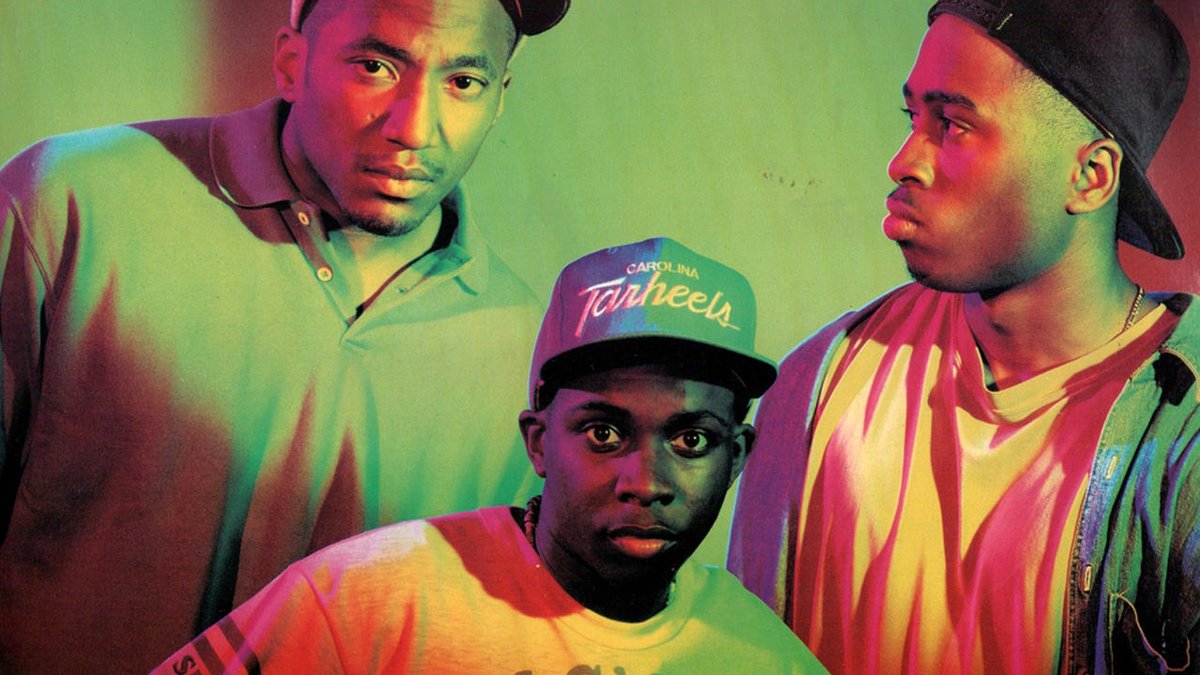
  •  The Low End Theory by A Tribe Called Quest (album, 1991)
  •  Enter the Wu-Tang (36 Chambers) by Wu-Tang Clan (album, 1993)
  •  Buena Vista Social Club by Buena Vista Social Club (album, 1997)
  •  “Livin’ La Vida Loca” by Ricky Martin (single, 1999)
  •  Songs in A Minor by Alicia Keys (album, 2001)

 WNYC broadcasts for the day of 9/11 (radio broadcast, September 11, 2001)

 WTF with Marc Maron with guest Robin Williams (podcast, April 26, 2010)

You can listen to many of the recordings on your favorite streaming service. Also, the Digital Media Association, a member of the National Recording Preservation Board, has compiled a list of some streaming services with National Recording Registry playlists. Enjoy!

To learn more about preservation efforts-including how to get started on your own projects-check out some of the resources available from the American Library Association’s CORE: Leadership, Infrastructure, Future.

Photo: From the album The Low End Theory by A Tribe Called Quest

May the Fourth Be with Your Library

It’s May 4-a day when the world turns its gaze to a time long ago in a galaxy far, far away and celebrates Star Wars. When Star Wars Episode IV: A New Hope was released in 1977, director George Lucas couldn’t have conceived that his film would become a cultural and economic behemoth, spawning a multitude of sequels and spinoff films, TV shows, books, and toys, and influencing generations of movie fans, science lovers, and learners.

One of I Love Libraries favorite Star Wars-related places is Rancho Obi-Wan, a nonprofit museum in Petaluma, California that houses the world’s largest Star Wars memorabilia collection, as certified by Guinness World Records in 2014. Museum founder Steve Sansweet has amassed more than 500,000 Star Wars items since the museum’s founding in 1998, everything from rare toys to life-size replicas of Star Wars characters. The collection is outstanding. Listen to I Love Libraries editor Phil Morehart discuss the collection with Sansweet here.

For more Star Wars audio delights, we recommend this fascinating look at the sound artists at Skywalker Ranch in Marin County, California, who use Soundminer to access and build an ever-expanding library of nearly a million sounds from the Star Wars universe.

Not surprisingly, libraries and librarians across the US have become enthusiastic supporters of Star Wars Day. Celebrations are being held in person and virtually, everywhere from California to Florida. We’re particularly impressed with the efforts of St. Tammany Parish Library in Covington, Louisiana. For readers looking to dive into the world of Star Wars novelizations and serials and how they fit into the series’ canon, the library has created an webpage outlining the works and lineage. We’ve been engrossed all day.

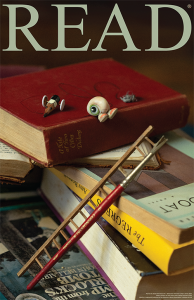
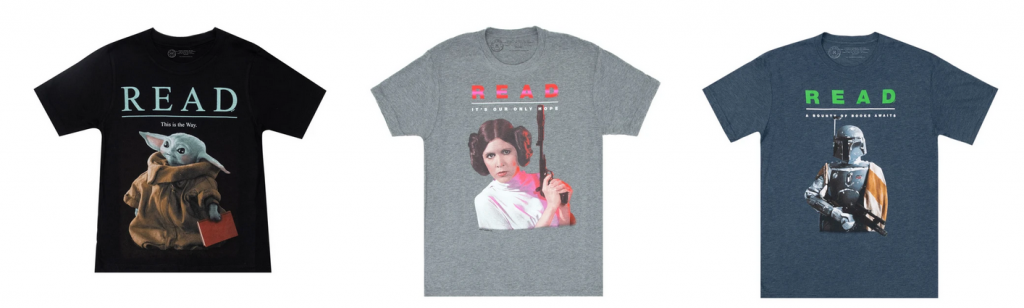
And, of course, there’s the American Library Association’s famous READ posters and T-shirts featuring The Child aka Grogu from Star Wars: The Mandalorian. We can’t think of a better way to show your love for both Star Wars and libraries.

May the Fourth be with you!

A Home Run Collection

Spring is here (finally). Temperatures are rising; the sun is setting later in the evening; flowers are blooming; and a new season of America’s national pastime has started. That’s right: It’s time for some baseball.

We’re getting into the spirit with the digital collection at the National Baseball Hall of Fame and Museum in Cooperstown, New York, which is a baseball and history lover’s dream. It contains more than 10,000 pieces of baseball-related ephemera, from game-used uniforms and equipment to archival photos, videos, and more. It even has fascinating baseball-adjacent paraphernalia, including vintage baseball cards and costumes worn by actors in baseball-themed movies like The Bad News Bears, A League of Their Own, The Natural, and 24.

Here are some of our favorites from the collection.

  • Shoes worn by pitcher Bob Feller of the Cleveland Indians when he struck out 18 batters in a nine-inning game on October 2, 1938-a modern record that remained unsurpassed for more than 30 years.
  • Babe Ruth’s final homerun baseball. Playing for the Boston Braves, Ruth hit this ball out of Pittsburgh’s Forbes Field on May 25, 1935, for the 714th and final round-tripper of his major league career.
  • An All-American Girls Professional Baseball League ball signed by members of the 1946 Muskegon Lassies team.
  • The trademark glasses worn by broadcaster Harry Caray while working for the Chicago Cubs.
  • The shirt worn by Carl Yastrzemski of the Boston Red Sox when he recorded his 3,000th career hit in a game against the New York Yankees at Fenway Park on September 12, 1979.
  • The cap worn by pitcher Jim “Catfish” Hunter of the Oakland A’s when he threw a perfect game against the Minnesota Twins on May 8, 1968.
  • A reproduction Brooklyn Dodgers jersey worn by actor Chadwick Boseman while portraying Jackie Robinson in the movie 42.

To learn more about the National Baseball Hall of Fame Museum and Library, visit American Libraries for explorations of its archival and research work and holdings.

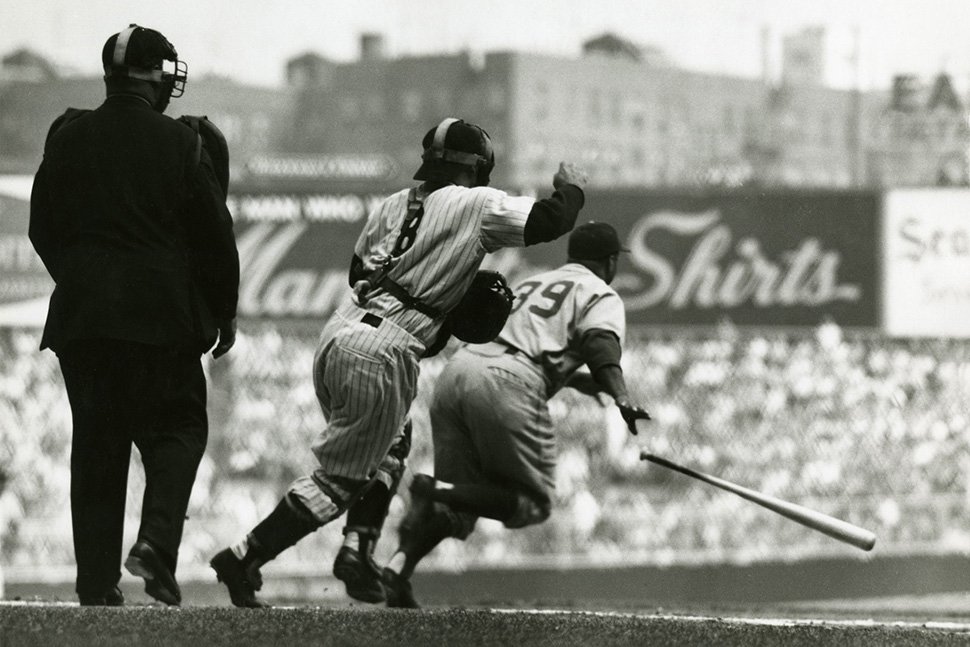
Photo: At Yankee Stadium during the 1955 World Series, Brooklyn batter Roy Campanella and New York catcher Yogi Berra both start toward first base: Campy attempting to beat out his grounder and Yogi preparing to back up the play. Courtesy of the National Baseball Hall of Fame.

Show the World Your Love for LeVar

LeVar Burton is a national treasure. The actor, director, and author has engaged and entertained audiences for decades in movies like The Hunter and Ali and on television in Roots and Star Trek: The Next Generation. And as the longtime host and executive producer of PBS’s Reading Rainbow, he taught a generation of kids the power of literacy and education. He’s also an outspoken advocate for the freedom to read.

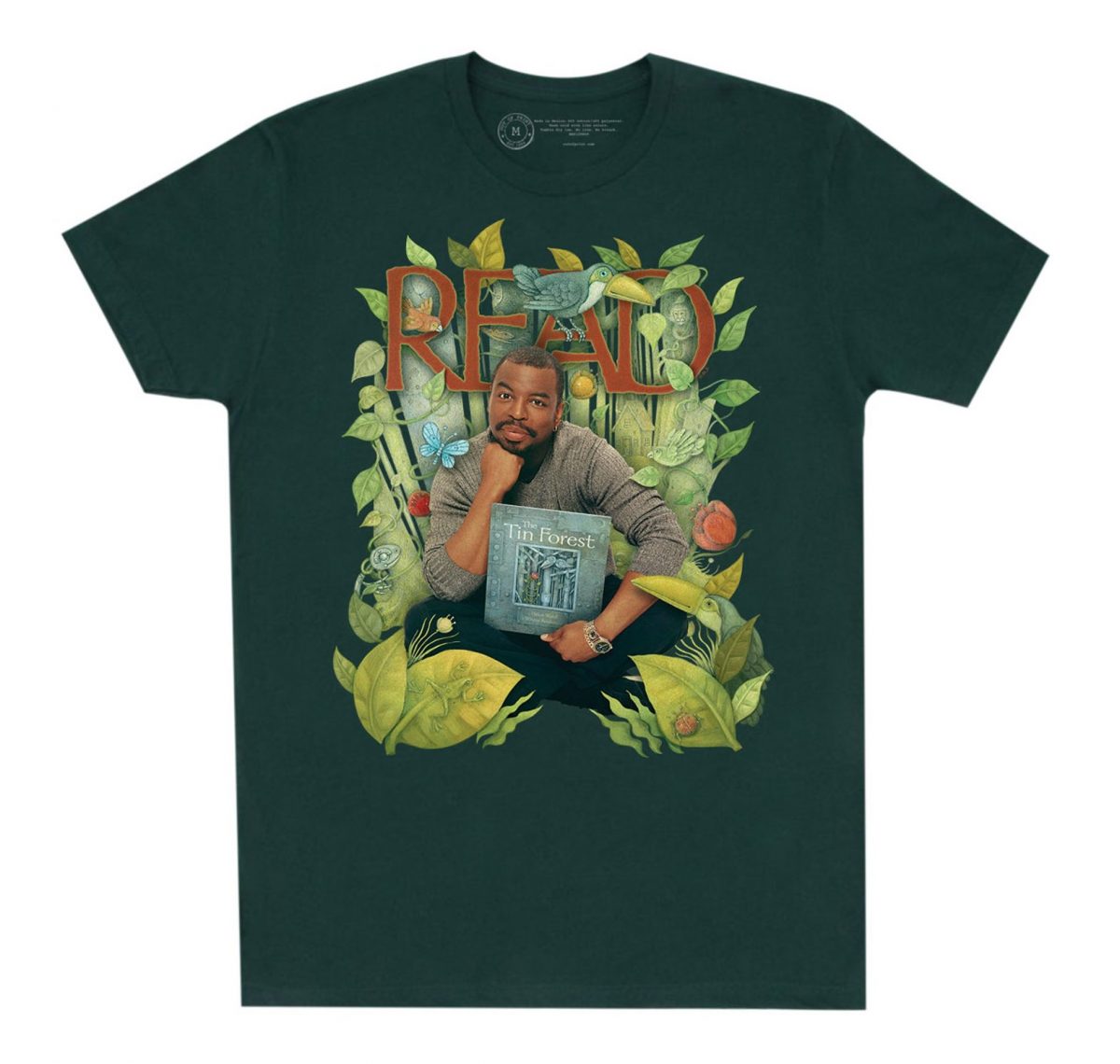
Show the world your love for both LeVar Burton and reading with the new shirt from our friends at Out of Print, featuring the American Library Association’s (ALA) 2002 READ poster of Burton holding a copy of Helen Ward’s magical children’s book, The Tin Forest. It’s available in both unisex and women’s sizes. Each purchase supports ALA and our work keeping libraries strong across the country.

A Conversation with Jeopardy! Champ Amy Schneider

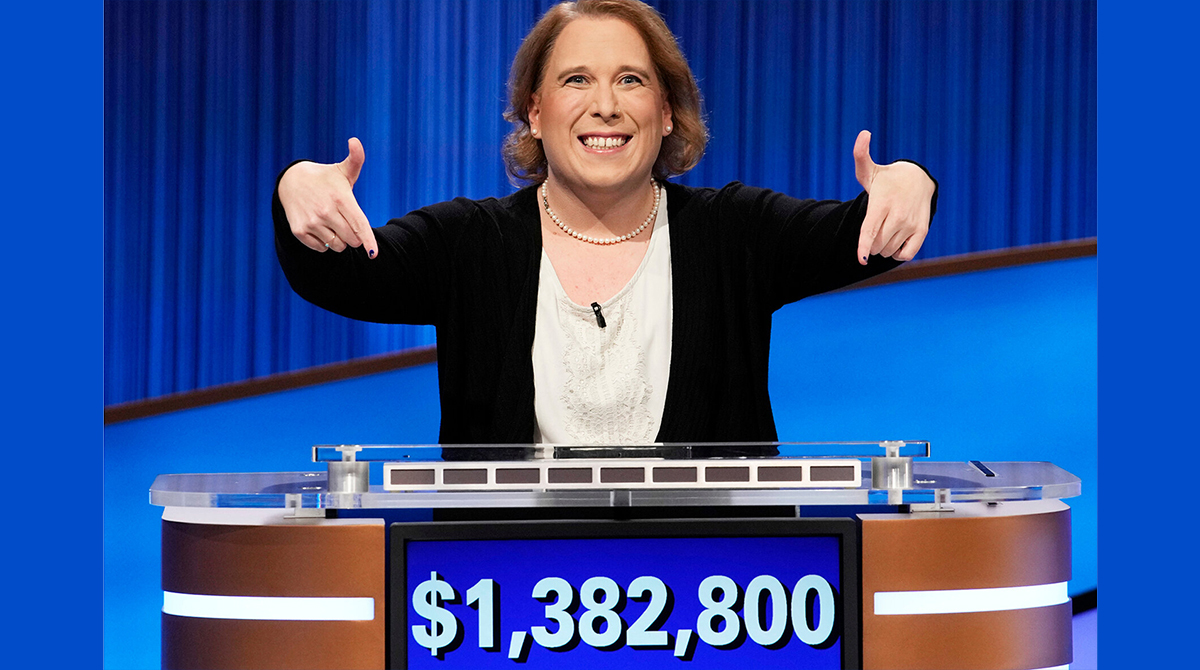
Amy Schneider is an American software engineer and recent Jeopardy! champion. Following an impressive 40-game winning streak (which ended January 26 when Schneider narrowly lost to Rhone Talsma, a librarian from Chicago Ridge [Ill.] Public Library), she became the most successful woman ever to compete on the show. She is also the first openly transgender contestant to qualify for Jeopardy!’s Tournament of Champions.

In the leadup to Schneider’s talk on March 25 at the Public Library Association’s 2022 Conference, Schneider spoke with I Love Libraries about her experiences on Jeopardy!, the importance of trans representation, and the role of libraries in her life.

Congratulations on your success on Jeopardy! Did you ever imagine you would have such a historic run on the show when you stepped onto its stage that first time?

Not at all. I thought I could win three or four games, at most, if things went well. I knew I was pretty good at it, and I definitely had the confidence that I was capable of winning some. But yeah, nothing, nothing like this.

Have you been a Jeopardy! fan your entire life?

I have, yes. I grew up with it. My parents watched it, and I don’t remember a time when it wasn’t around.

When did you first decide that you wanted to be on the show? Was it a lifelong dream of yours?

Yeah, more or less. I’ve been auditioning [for it] since maybe 2007 or 2008, somewhere in there. It’s been a long time.

What’s the difference between watching the show at home and being there as a contestant? What was going through your mind during your run?

The first difference I would say is that it goes by so fast when you’re out there; like you just blink and it’s over. Beyond that, I was really trying to think as little as possible really; to not think about where I was and just focus on the questions and try to eliminate distractions in my mind. Especially that first time, there was a lot of anxiety that I was trying to ignore.

How did you prepare for the show? Did you turn to your local library, or any library, for help at all?

You know, I tell people that Jeopardy! is something that you can’t study for, because it is just too broad and covers too much. But I think, in that sense, certainly all of my library usage over the years has [helped with] that. Apart from just being generally interested in reading and learning, I went through [footage of] old Jeopardy! games to look for patterns in what they asked and for things I was consistently missing.

Did the library play an important role in your life growing up?

Yeah, it did. I told the anecdote on the show about when I was a little kid my parents instituted a rule that I could only borrow from the library as many books as I could carry home by myself. It was definitely a thing as a family. We were always going to the library. We didn’t have much money at all, especially when I was very young, so buying books wasn’t really an option for us. But library trips were always there.

You’ve had a long career as a software engineer. How did how did that inform your Jeopardy! appearance both as you prepared for it and during the tapings?

The thing about engineering that drew me to it was the creative aspect of it. As I got into it, I realized that it’s really an act of translation. You’re trying to explain things to a computer, which is very dumb, and that forces you to examine all the unstated things that go into the requirements that are obvious; [things that] don’t need to be spelled out to a human being but have to be spelled out to a computer. I think that practice of trying to break down things down into their simplest parts and really understand them has been a good mental habit to develop.

You’re the first trans person to qualify for Jeopardy!’s Tournament of Champions, and you’ve spoken at length about how meaningful that’s been in terms of trans representation. How important was it for you, the trans community, and the world at large to be successful on the show?

I definitely know in my own life how important representation is. When I was a kid, I didn’t even know of the concept of trans people. When I started to become aware of their existence, they were always painted as jokes or criminals or weirdos or these sorts of things and not as normal people. That kept me from understanding myself and my identity for decades. I think about how meaningful it would have been to me as a child and as a young adult to see a trans woman on a show that I watched all the time and to see them just hanging out and being who they are and not being weird basically. I’ve been surprised by how many people who have reached out to me to talk about how much it’s meant to them—and in particular to their families, to the parents, and grandparents—in helping them understand each other in a way that they hadn’t before.

You’ll be speaking at the upcoming Public Library Association conference. What do you hope that librarians can learn from your experiences?

The message I hope to spread is what reading and learning can give you. Jeopardy is just one thing that could come out of it. It’s fun in itself and enjoyable in itself. Forming networks of association by reading widely and then seeing the connections between things that you might not have seen before–between history and science, or art and philosophy or all these other things– helps you understand all of them better and helps you have a more full understanding of the world and where you live in it.

Photo via Jeopardy Productions, Inc.

This Is Librarians on Jeopardy!

The internet and game show lovers are abuzz over librarian Rhone Talsma’s victory over trivia ace Amy Schneider on Jeopardy! on Wednesday night.

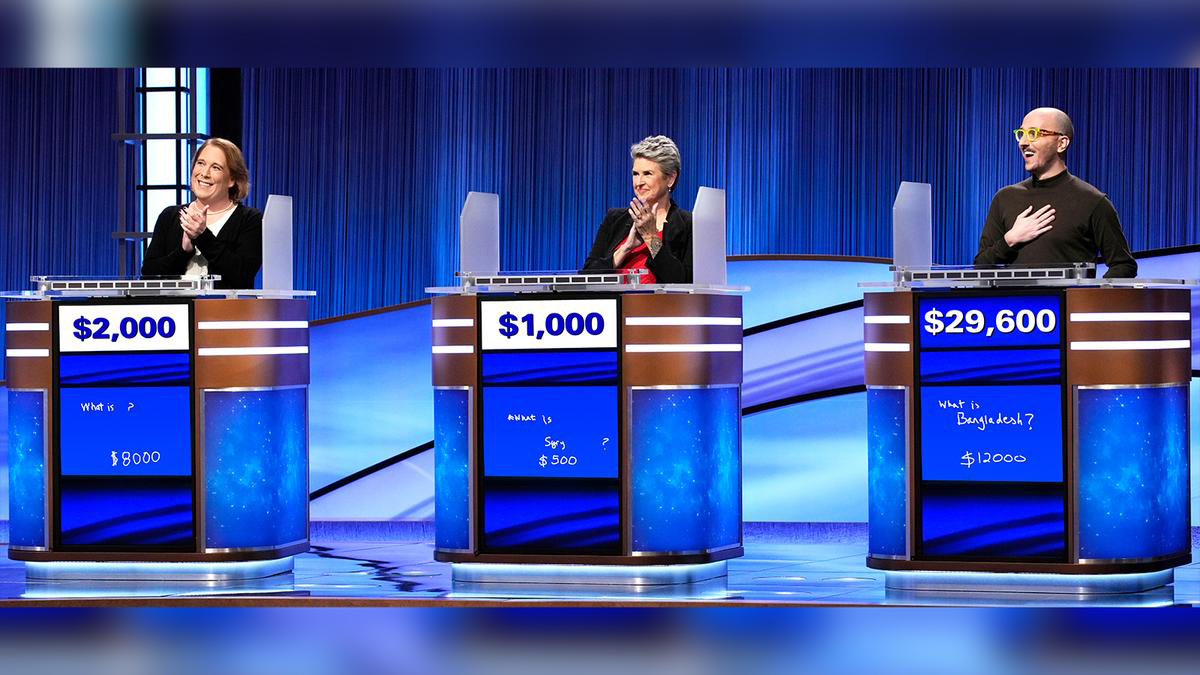
Talsma, a multimedia librarian at Chicago Ridge (Il.) Library, beat the long-running champ when she failed to come up with the correct response to the clue, “The only nation in the world whose name in English ends in an H, it’s also one of the 10 most populous.” (The answer is: “What is Bangladesh?”). The error left Schneider in second place and ended her 40-game winning streak.

Talsma netted more than $29,000 with his win. In an interview with the Chicago Tribune, he said that librarianship gave him an upper hand on his Jeopardy! debut: “It is literally in my job description to find answers to any question directed to me at the reference desk. Sitting at the desk for eight hours a day, I’m almost guaranteed to learn something new thanks to a question from one of our patrons.”

In good company

Did you know that Talsma is one in a long list of librarians who have appeared on the show? Emma Boettcher, a librarian at the University of Chicago, famously ended James Holzhauer’s 32-game winning streak in 2019. And there are many more!

Eleven librarians who have appeared on Jeopardy! spoke with American Libraries in 2017 about their experiences on the show, from tryouts and prepping to game day and beyond. It’s a fascinating read.

Julie Hornick, an instructional services librarian at Florida Southern College in Lakeland, appeared on the show in 2014. She told American Libraries of her preparation process: “I was a school librarian at the time. Before I went out to California for the taping, I told my students, “Come up to me any time of day with any kind of question.” If a student could ask a question that I couldn’t answer, I would give them a Dum Dum sucker. I don’t know if they enjoyed trying to stump me or they just wanted the sucker.”

And Jennifer Hills, a reference librarian at Twin Falls (Idaho) Public Libraries who appeared on the show in 2011, said that her appearance follows her around in everyday life: “I happened to be in the grocery store one night, and there was a gal on one of those scooter carts, and I’d go down an aisle, and she’d come down the same aisle. I was kind of getting creeped out. Finally, we came out in the produce section, and she said, “Were you the girl that was on Jeopardy!?”

Sadly, Talsma’s stint on Jeopardy! was short-lived-the librarian was defeated on Thursday’s show-but his legacy lives on. Who knows, sometime in the future Jeopardy!may even feature the clue: “Who was the Chicago Ridge librarian that set the internet on fire with an unlikely upset victory in 2022?”

Photo via Jeopardy Productions, Inc.

This Is the Way to Check Out Books

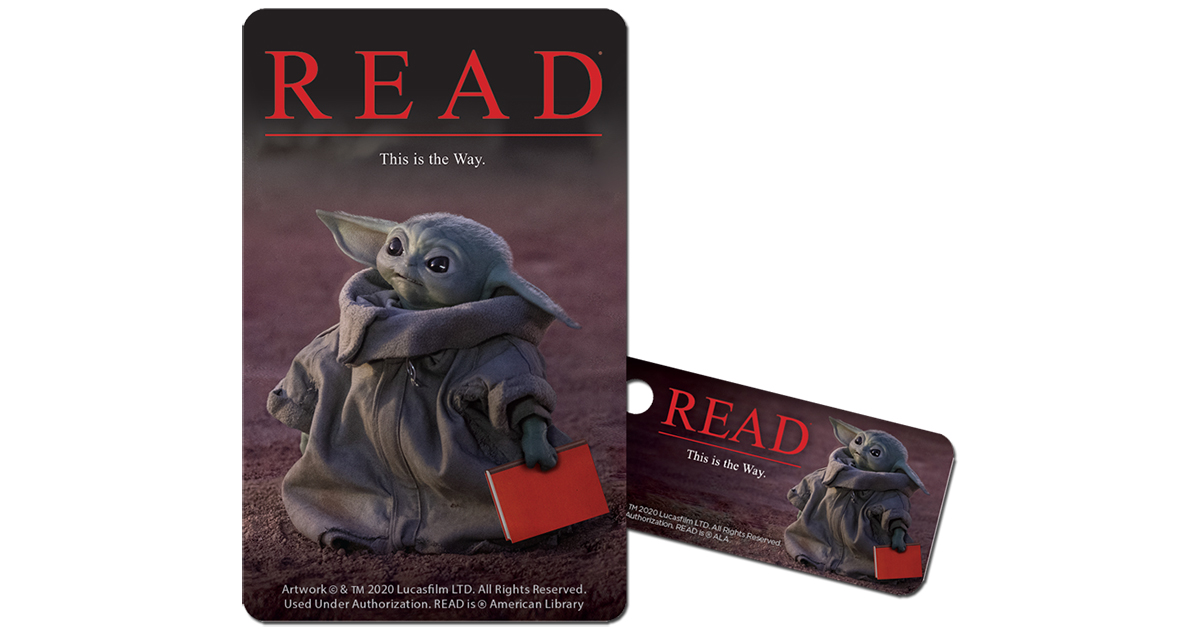
Picture being 5 years old and getting your first library card. Now imagine that card – a key that unlocks the secrets of the entire galaxy – had an image of the universe’s cutest Jedi Master. That’s right – your first library card featured none other than Grogu, aka Baby Yoda, aka The Child.

For a young boy in Tyler, Texas, this was no fantasy. As the Tyler Morning Telegraph reported, 5-year-old Ace Smith and 4-year-old Tripp Bowie were the first patrons at the Longview Public Library – and the nation – to get the out-of-this-word limited edition library cards.

The Child debuted as a READ® poster star in December 2020, and now the breakout star of The Mandalorian is pocket sized. When Ace and Tripp reach for their library cards, they’ll be greeted by the adorable green guy and the phrase READ: This is the Way.

Now Star Wars fans might see these cards touching down at their local libraries. The American Library Association is making them available to libraries throughout the country.

Want Grogu on your local library’s cards? Tell you librarian to request more information.  

May the Fourth Be with You – and with Libraries

Star Wars and libraries go together like R2D2 and C3PO, like Luke and Leia, like Mando and Grogu. After all, when you can’t explore a galaxy far, far away…why not explore your library?

Check out these literary Star Wars tributes and explore a universe of reading and adventure.

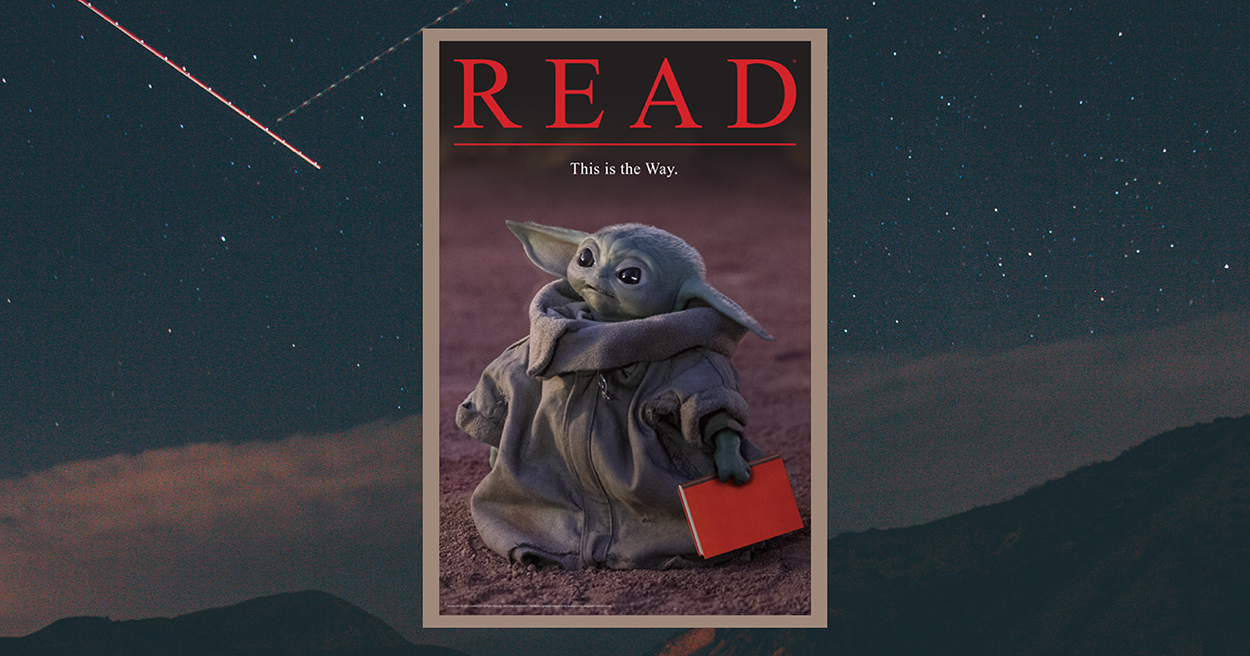
Baby Yoda Poster

He has many names: Baby Yoda, The Child, Grogu. But the newest title of this little green guy is: Star of a READ® Poster. After slurping up frogs and riding shotgun across the universe with his bud the Mandolorian, he loves to kick back with a good book. Baby Yoda, he’s just like us! (Also, check out Master Yoda, too!)

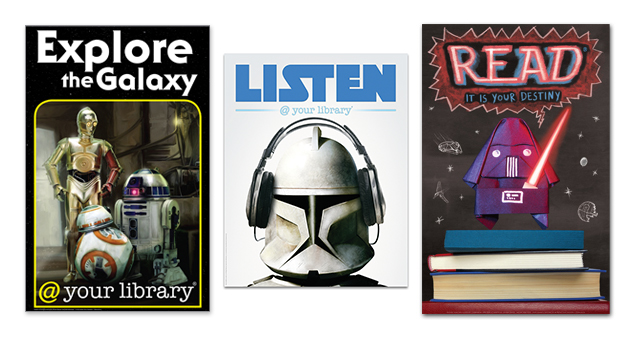
Droid Poster

Before there was Grogu, droids ruled the Star Wars Universe. Join the OG crew – including C3PO, R2D2, and BB-8 – and explore the galaxy through your library.

Dark Side Posters

Even bad guys need a break. And when you spend your days wearing heavy helmets, audiobooks are probably the way to go. What do you think this Clone Trooper is listening to? The 7 Habits of Highly Effective Servants of the Galactic Republic? Maybe Darth Vader needs to check out something on anger management.

And if you are still not sure what to wear to your May the Fourth party, visit Out of Print for tons of Star Wars and READ® inspired clothes. And this week only, they are running a special: Buy one Star Wars tee, get one Star Wars tee free from May 4 – 8.

Check out the full selection of READ® products at the ALA Store.

This Nickelodeon Show Features a Magical Secret Library

by Burkely Hermann

What if I told you that there was an all-ages animated series where a special and magnificent library was so central, it even surprised the series creator? There is such a show-Nickelodeon’s Welcome to the Wayne, created by Billy Lopez. It features a library that exemplifies the series’ quirkiness.

The role of the library in the show goes beyond positive depictions of libraries and librarians in recent years in animated series such as Too LoudMira, Royal DetectiveShe-Ra and the Princesses of PowerHilda, and Cleopatra in Space. In Welcome to the Wayne, the chief librarian of a magical library, called the Stanza, is a Black woman named Clara Rhone-one of very few librarians of color in popular culture). She is voiced by Harriett D. Foy. In the first season, the library and its non-human employees are central to the series, a theme continued in the second season, emphasizing the value of libraries as places of knowledge, and understanding.

In the show’s first episode, one of the three protagonists, Saraline, is unable to find the secret library in her apartment complex, the Wayne. Her friend and new apartment resident, Ansi Molina, stumbles upon the library by accident, as he tries to retrieve his John Keats book taken by a squidlike creature he nicknames John Keats. In the meticulously organized library, which contains information on the inhabitants of the Wayne, he meets Clara, who is re-shelving books. While she is unsuccessful in getting Ansi to become a library member, he later helps her shelve books and uses a magic guardrail to travel to various parts of the library. Information from the library helps Ansi aid his friends and sets in motion coming adventures, like getting a shiny, and strange, card.

The second episode begins with the library. Ansi’s new friend, Julia Wilds, travels with Saraline and her brother, Olly, to the library, as they continue to try to unravel the mysteries of the Wayne. While Julia appears to be overwhelmed, Team Timbers (Saraline, Olly, and Ansi) are successful in fending off the mysterious masked man, Tony Stanza, keeper of the Stanza archives, who is trying to seize a card Ansi received from the library in the previous episode. Despite the fact he appears to be a villain, near the end of the episode, Tony surprisingly Olly and Saraline cards of their own, telling both of them, and Ansi, to return their cards before “time runs out.” This sets in motion the events of the next episode.

Eight episodes later, in episode 12, a new character, a vampire named Andrei, is informed that his book is overdue and that he must return it. He and Team Timbers follow a creature to the library that snatched his book. The episode that follows highlights the issues of underfunded libraries and the value of knowledge, even as they fight off a library ninja voiced by Charnele Crick. Clara sends the ninja to kill the vampire, because vampires attacked residents in the Wayne in the past, and drive Team Timbers out of the library. As the whole library mobilizes against Team Timbers, the ninja, who happens to be Clara’s granddaughter, is trapped between card catalogs. Andrei uses his superhuman strength and agility to save her. At one point, Olly jokes that the catalogs are attacking them because they are “angry about being replaced by the internet” as he continues to film everything for a viral video. The role of librarians as gatekeepers is emphasized when Clara warns Team Timbers that if they leave with Andrei, they can never return. Ansi, who loves the library, accepts this, even as he later laments his inability to access the library as a result.

A few episodes after this, the library ninja helps Team Timbers and introduces herself as Goodness, officially becoming part of the team defending the Wayne from evil forces. In the show’s 19th episode, Goodness and Saraline break into the library, catching a creature that looks like a running nose and spot Clara shelving books. In the season one finale, Clara offers her help to the eight-person team of protagonists, which has expanded beyond the original members of Team Timbers to form what is known as the Gyre.

In the show’s second and final season, Saraline describes the library as one of the quietest places in the Wayne in one episode; this library is also where her friend Annacile/the Arcsine goes to find out who has received her magical powers. A few episodes later, the show emphasizes the importance of the library as a quiet place for contemplation and study. Katherine Alice travels with Goodness to the library, with Clara shushing Goodness, telling her to use her “Stanza voice.” While this corresponds with the shushing librarian stereotype, Clara makes up for this by showing them the Wayne Cyclodex, a book that records “everything that has ever happened” in the Wayne. This book becomes central in the episodes that follow, her words becoming a warning to those in the Gyre. In the penultimate episode of the series, the characters briefly return to the library, which is described as a place where time stands still, before they enter a trap set by the show’s villains. While the characters do not travel to the library in the final episode, Clara is briefly possessed by rainbow gas and is shown, in the ending montage of the episode, doing exercises on the balcony of her room in the Wayne.

Although the series ran from 2017 to 2019 and likely will not return in the future, all 30 episodes can be purchased online. This short-lived but memorable series makes clear the value of libraries and librarians to society, as places of knowledge and diversity, more than most animated series.

Subscribe to the I Love Libraries newsletter for more great library stories.

#LibraryTikTok Takes You Behind the Shelves

TikTok has taken the world by storm, with its catchy, short-form videos driving trends in music, advertising, news, and more.

Libraries and their staff have gotten in on the fun, using the platform to promote their programs and services, share tips and recommendations for readers, and spread the joy of literacy to the masses. While many libraries are still closed to the public due to the COVID-19 pandemic, #LibraryTikTok lets us explore the shelves virtually.

Below, check out ten of our favorite library TikToks, from hilarious memes to behind-the-scenes library secrets.

@a.pocketful.of.stars explores the mystery of an unopenable library book:

@carolllblo shows off an amazing school library painting project:

@lowestoft.library offers a comical take on library shelving:

@teachinatardis dispels outdated myths about reading:

@mychal3ts spreads the joy of having a library card:

@bondurantlibrary demonstrates how damaged books get repaired:

@connorthemiller highlights why library privacy policies matter:

@historyb00ks explains an amazing new digitization technology:

@maricopalibrary shares a fun skit about sanitizing returned books:

And @woodlandpubliclibrary documents a day in the life of Henrietta, their library cat:

Subscribe to the I Love Libraries newsletter for more great library content.